Quick SummaryWet grass dramatically reduces track traction.
Worn crawler tracks are responsible for many slipping problems.
Exceeding the mower's real working angle is a common mistake.
Incorrect mowing routes often cause unnecessary sliding.
Routine maintenance can significantly improve hillside stability.
The remote-controlled slope lawn mower is specifically designed for uneven terrains. However, every machine has its physical limitations. When the force of gravity pulling the mower down the slope is greater than the frictional force generated by the tracks, skidding is inevitable. Understanding the reason can help operators take preventive measures, thereby ensuring smoother, safer and more efficient lawn mowing operations.
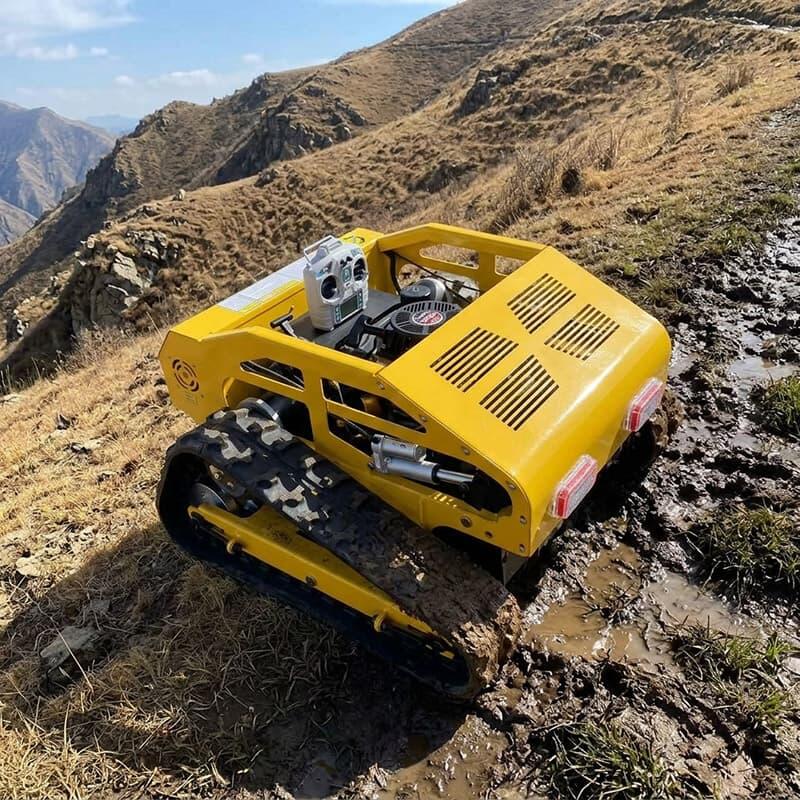
How Remote Control Mowers Maintain Traction on Hills
Unlike traditional wheeled lawn mowers, the tracked remote-controlled mower distributes its weight over a larger contact area. This increased contact area enhances traction, minimizes soil compaction, enables the machine to climb steeper slopes, and protects delicate lawns while preventing excessive soil compression.
Three primary factors determine whether a mower can maintain traction:
When all three remain balanced, the mower climbs smoothly. Once one factor changes—for example after rain or when tracks become worn—the available grip drops rapidly and sliding begins.
Common Reasons Your Mower Slides on Steep Hills
1. Wet Grass, Mud, and Loose Soil
The number one reason for slipping is reduced ground friction. Morning dew, rainfall, irrigation systems, and muddy soil create a thin lubricating layer between the tracks and the ground. Even premium crawler mowers will experience reduced climbing ability under these conditions.
Soft soil also deforms under the mower's weight. Instead of gripping the surface, the tracks begin digging into the ground, reducing forward traction while increasing the risk of sideways movement.
Professional Tip
If possible, wait several hours after rainfall before mowing steep hills. Allowing moisture to evaporate dramatically improves traction while protecting both the lawn and the mower.
2. Worn or Improperly Adjusted Tracks
Tracks are consumable parts. After hundreds of hours of operation, the deep tread pattern gradually wears down and flattens. As the rubber wears, the machine's traction decreases, making it difficult to grip grass and soil effectively.
Track tension is also crucial. If the tracks are too loose, they may excessively bend when climbing slopes. On the other hand, if the tracks are too tight, they will reduce the contact area with the ground. Both of these situations will decrease traction and increase the risk of slipping on uneven terrain.
Regularly inspect the track condition and replace it before severe wear occurs. This simple maintenance measure can typically restore most of the lost climbing performance.
3. Working Beyond the Machine's Real Slope Capacity
Manufacturers typically publish maximum slope ratings based on ideal testing conditions. These figures generally assume dry grass, firm ground, moderate temperatures, and a well-maintained machine.
The real-world environment is rarely exactly the same as laboratory conditions. Wet grasslands, loose gravel, dense weeds, and rugged terrain can reduce the actual climbing ability of vehicles by 5-10 degrees. Attempting to operate beyond these limitations significantly increases the risk of skidding and overturning.
| Terrain Condition | Recommended Safety Margin |
|---|
| Dry Grass | Use rated maximum angle |
| Morning Dew | Reduce by 5° |
| Wet Soil | Reduce by 8–10° |
| Loose Gravel | Operate with extra caution |
4. Incorrect Mowing Routes
Many operators instinctively drive directly uphill and downhill. Although this appears to be the shortest route, it also places the greatest amount of gravitational force directly against the mower's traction.
Professional contractors usually mow steep hills using horizontal contour patterns. This distributes the load more evenly across the tracks and significantly improves machine stability while producing a cleaner cutting finish.
Sudden steering, aggressive acceleration, and abrupt braking should also be avoided because these actions momentarily reduce track grip and increase sideways drift.
5. Heavy Vegetation Creates Excessive Resistance
Dense weeds, tall grass, and thick brush place a much greater load on the cutting deck. As blade resistance increases, more engine power is consumed by cutting instead of driving the tracks.
Eventually, available traction decreases enough that gravity overcomes forward movement, causing the mower to begin sliding slowly downhill.
For heavily overgrown hillsides, divide the work into multiple passes rather than attempting to remove all vegetation in a single cut.
6. Unbalanced chassis and worn suspension components
Despite the excellent stability inherent in the design of tracked mowers, prolonged operation on rugged terrain inevitably leads to wear on suspension components, rollers, bearings, and chassis mounting points. As these parts gradually loosen or wear unevenly, the machine's weight distribution shifts; even a slight imbalance between the left and right tracks can significantly reduce traction when operating on slopes.
Operators often mistakenly attribute this gradual loss of traction to poor track performance, when the actual issue lies in the machine's undercarriage. Worn idlers, damaged tensioners, or uneven suspension movement can reduce the ground contact area, causing one track to lose traction sooner than the other. This results in the machine drifting sideways, particularly when turning or climbing slopes.
Regular inspections can prevent these issues from worsening. Check for loose bolts, damaged rollers, abnormal noise, excessive vibration, and uneven track wear. Addressing these problems early not only restores climbing stability but also avoids costly drivetrain repairs down the line.
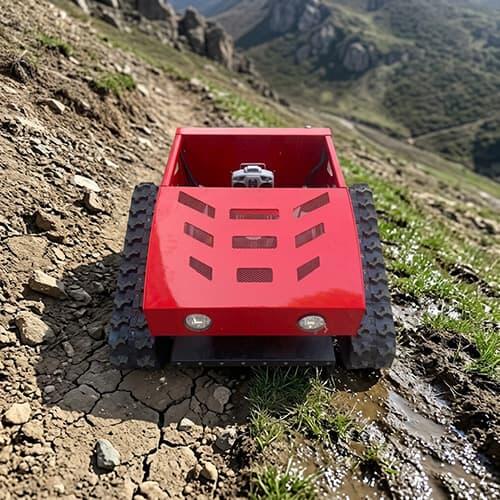
Step-by-Step Solutions to Prevent Hill Sliding
Once you identify the cause of poor traction, solving the problem is usually straightforward. Professional operators rarely rely on a single fix—they combine proper maintenance, route planning, and machine setup to achieve consistent hillside performance.
Step 1 — Evaluate the Ground Conditions
Walk the work area before mowing. Look for muddy patches, wet grass, exposed rocks, loose gravel, or hidden holes. If the ground is excessively wet, postpone mowing until conditions improve.
Step 2 — Inspect the Tracks
Verify that both tracks have equal tension and sufficient tread depth. Replace severely worn tracks before operating on demanding slopes.
Step 3 — Adjust Your Mowing Route
Instead of repeatedly driving straight uphill, mow horizontally across the slope in gradual passes. This contour mowing technique distributes weight more evenly and greatly improves stability.
Step 4 — Reduce Cutting Resistance
Raise the cutting height slightly when working in dense vegetation. Clearing extremely tall weeds in multiple passes reduces engine load and improves available driving torque.
Step 5 — Leave a Safety Margin
Never operate continuously at the machine's advertised maximum climbing angle. Maintaining a reasonable safety buffer significantly reduces both sliding and rollover risks.
Quick Troubleshooting Guide
| Problem | Likely Cause | Recommended Solution |
|---|
| Slides only after rain | Wet grass reduces friction | Wait until the ground dries |
| One side slips first | Uneven track tension | Adjust both tracks evenly |
| Machine struggles in thick weeds | Excessive cutting load | Increase cutting height and mow twice |
| Sliding gets worse over time | Track wear or chassis wear | Replace worn components |
Need More Hillside Mowing Tips?Watch real working videos, maintenance demonstrations, and steep-slope mowing techniques on our official TikTok channel.
Visit Our TikTok → Long-term maintenance tips to prevent slipping
Preventing landslides relies on ongoing maintenance rather than emergency repairs. Professional landscaping companies inspect their machinery before every job, as even minor wear can significantly impair a machine's climbing performance on steep terrain.
After each lawn mowing operation, make sure to remove the accumulated dirt, stones, wet grass and other debris from the tracks. Accumulated dirt will reduce the effective depth of the tracks and decrease the contact area between the tracks and the ground. If the debris dries and hardens, it will accelerate the wear of the tracks and increase the load on the drive motor.
Track tension should be checked regularly. If the tracks are too loose, they may skip or jump when climbing slopes; conversely, if they are too tight, maneuverability is reduced and internal friction within the drive system increases. Maintaining proper adjustment of both tracks ensures balanced traction and smoother operation on steep slopes.
If the lawn mower is used for commercial purposes, it should be inspected monthly for the rollers, bearings, suspension arms and chassis mounting bolts. Replacing worn-out components before they break down helps maintain a uniform weight distribution and ensures that the track system performs at its best throughout the mowing season.
The maintenance of the blades is equally important. Sharp blades can cut the lawn cleanly and efficiently, with less resistance, allowing the drive motor to exert its maximum climbing power. Dull blades, on the other hand, will increase the cutting load, forcing the machine to operate more strenuously and increasing the risk of slipping on steep slopes.
Pro Maintenance Checklist✔ Clean crawler tracks after every use.
✔ Check track tension weekly.
✔ Inspect rollers and suspension monthly.
✔ Sharpen or replace blades regularly.
✔ Store the mower in a dry, well-ventilated location.
✔ Avoid operating immediately after heavy rainfall.
Frequently Asked Questions
Q1: Is it normal for a crawler-type lawn mower to slip slightly on a very steep slope?
Yes. Each remote-controlled lawn mower has an actual traction limit. On soft soil or very steep slopes, the tracks may experience slight sliding. However, continuous sliding usually indicates track wear, improper operation techniques, or unsuitable terrain conditions.
Q2: Why does my lawnmower only slip after it rains?
Rainwater creates a thin, wet film between the tracks and the grass, significantly reducing friction. Even a machine that performs perfectly on dry slopes may lose traction on wet ground. Therefore, wait until the ground is dry before mowing whenever possible.
Q3: Can installing new tracks completely solve the slippage problem?
The new tracks significantly improve traction, but that is only part of the solution. A sensible mowing path, an appropriate cutting height, balanced chassis positioning, and the correct operating speed are equally crucial for ensuring safe operation on slopes.
Q4: What is the safest way to mow on a steep slope?
Professional operators recommend mowing across the slope whenever conditions permit, rather than moving directly up or down the incline. Maintaining a slow, steady speed and avoiding sudden turns helps ensure optimal stability throughout the operation.
Conclusion
Remote-controlled mowers slipping on steep slopes is typically caused by environmental factors, maintenance issues, or improper operation rather than manufacturing defects. Wet grass, worn tracks, overloading the mower, excessive slopes, and incorrect mowing paths are the most common causes of traction loss.
By conducting regular machine inspections, promptly replacing worn-out parts, choosing safer mowing routes, and operating within the recommended slope capacity of the lawn mower, users can significantly enhance the performance of mowing on slopes and extend the lifespan of the equipment.
For commercial landscaping companies, municipal departments, farmers, and homeowners, proper traction management means safer operations, higher mowing efficiency, lower maintenance costs, and more stable mowing quality on complex terrains.
Need a Professional Remote Control Slope Mower?
Explore real working videos, customer cases, and the latest remote-controlled crawler mowers designed for steep slopes, farms, orchards, solar farms, and commercial landscaping.
Watch VideosRequest a Quote