
86 13686388557

Date:2026-10-05
The real schedule, the cheap parts that save the machine, and the checks most owners skip
Open the manual and you will find a maintenance table that runs to several pages. Oil change, air filter, hydraulic fluid, track tension, blade bolts, grease points, battery, remote control, safety interlocks. It looks like a second‑time‑consuming job. From working with many commercial fleet owners and reviewing our factory service tickets, the reality is far more manageable: a small handful of tasks carry most of the failure risk, and all other items can be grouped based on actual operating hours. This is the practical schedule built for real‑world field use, rather than purely written for warranty compliance.
This single simple habit prevents more component failures than any other combined service task. Wet grass, mud and plant sap get packed deep into the undercarriage, deck housing, track rollers and blade spindle area. Left to dry, it hardens into cement‑like buildup that throws off track alignment, overheats bearings and wears down track lugs prematurely. At the end of every shift, tilt or lift the machine and pressure‑wash the underside, deck and rollers. Then run the unit for roughly one minute to spin off trapped water before putting it into storage. If you only complete one maintenance item from this whole list, make it this one.
Before firing up the engine, inspect track tension or tyre pressure; look for hydraulic leaks around pumps and drive motors; verify blade bolts are properly torqued; and confirm the deck sits level. If you worked in heavy dust the previous day, give the air filter a visual check. For remote‑controlled units, test all safety functions with the machine securely propped on stands: engine kill function, traction lock‑out, and dead‑man stop response. Our after‑sales records show many operators skip this step. A remote transmitter that cannot stop the machine is not a minor maintenance nuisance — it is a worksite shutdown risk.
Pivot points, deck lift linkages, accessible blade spindle bearings, and track or wheel bearings require greasing following the manufacturer’s specified interval. Always use the correct grease grade and avoid over‑greasing: forcing excessive lubricant pressure can blow out rubber seals and invite contamination. While you are completing greasing work, go through all critical fasteners. Constant operating vibration gradually loosens bolts, especially on blade carrier assemblies, deck mounting points and track drive sprockets. Using a torque wrench here prevents costly roadside breakdowns out on the slope.
Carry out engine oil and filter changes following manual guidance. For most small diesel and gasoline commercial engines working under slope‑mowing loads, fresh oil is needed at 25 operating hours; commercial machines rack up these hours far faster than many owners expect. Inspect the air filter more frequently in dry, dusty environments; replace it once it cannot be cleaned with gentle compressed‑air blowing. Clear debris from cooling fins, radiators and protective shrouds. An overheating engine rarely gives obvious advance warning before permanent internal damage sets in.
Check hydraulic fluid level and visual condition. Dark, cloudy or foamy fluid signals water or air has entered the hydraulic circuit, typically caused by worn seals or an improperly closed breather cap. Replace return filters on schedule, and never top‑off fluid with a different viscosity rating without cross‑checking the service manual. Mixing incompatible oil grades alters drive‑system response and can overheat the hydraulic pump. Carefully inspect hoses for rubbing wear, cracking or ballooning bulges, particularly sections running close to the track frame. A burst hydraulic hose while working on a slope creates serious safety hazards for both equipment and operators.
Measure remaining lug depth on rubber tracks. Once track lugs wear flat, hillside grip drops sharply; continuing to run on worn tracks also accelerates roller and sprocket wear. Always replace tracks as matched pairs. Inspect drive sprockets and idler rollers for hooked teeth and unwanted free‑play. Rotate or swap out hammer blades and flail knives, retorque carrier bolts, and check the spindle for measurable end‑float movement. Neglected spindle bearing wear will quickly progress to a snapped shaft. Many fleet customers learn this lesson the hard way mid‑shift on remote job sites.
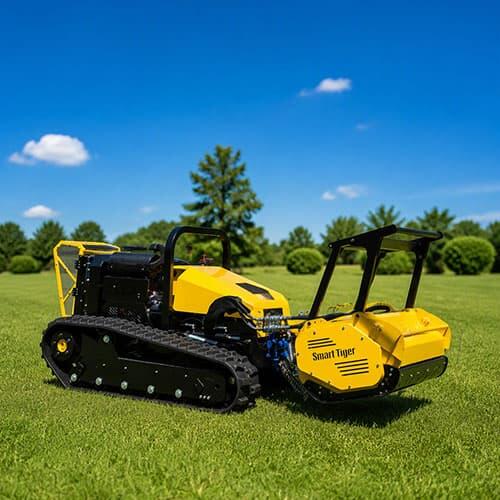
Complete battery maintenance at both the start and end of each mowing season: clean terminals, test voltage under real load conditions, and keep batteries connected to a maintenance charger throughout winter storage. Depending on your engine model, either drain fuel completely or add fuel stabilizer for long‑term storage. Service remote‑control transmitter batteries and inspect antennas; verify emergency stop functions work reliably. Visually examine the main frame and mounting brackets for cracks, especially around deck attachment zones, where metal fatigue failures most often originate. Touch‑up chipped paint on bare metal surfaces before corrosion gains hold.
Running with a clogged dirty air filter, assuming it can last one extra week.
Ignoring minor hydraulic weeping leaks until the reservoir runs completely dry.
Skipping spindle greasing, eventually forcing full deck replacement.
Delaying track replacement until lugs are fully worn, which damages rollers and sprockets and multiplies repair costs.
Failing to log completed service work.
Keeping a simple logbook inside your service trailer that records operating hours and service dates separates proactive planned maintenance from costly emergency breakdown repairs.
A properly‑serviced remote control mower can outlast multiple equipment operators and retain strong resale value. Meanwhile a neglected unit will turn unreliable within a single mowing season, and failures always tend to strike when you are already up against tight job deadlines. This maintenance schedule is not overly complex. Success comes down to consistently completing those quick five‑minute daily tasks so large‑scale expensive repairs do not catch you off‑guard. If you want to view real‑world maintenance demonstration clips, you can find field footage on our TikTok channel. You can also review different RC mower models on our Made‑in‑China store page.
If you have questions building a service schedule for your own fleet, reach our engineering team via WhatsApp.
Get instant pricing, specs, and shipping details from our team.