
86 13686388557

Date:2026-10-21
Real‑world case study from a family‑run Sierra Foothills vineyard
When the crew at a family‑run vineyard in the Sierra Foothills took delivery of their first tracked RC mower, they did not expect it to completely reshape how they managed their whole property. For twelve years, their workflow revolved around working around terrain limitations: learning which slopes to avoid after rain, figuring out which rows could only be mowed in cool early‑morning hours before the soil baked hard. Instead of equipment adapting to the land, the crew always had to adapt to what their machines could not handle. Then they handed an operator the remote control and sent the tracked unit onto a 28‑degree hillside between vine blocks. Everything changed in a single afternoon.
This 950‑pound tracked RC mower came fitted with a 28‑inch flail deck, proportional remote control with 300‑foot line‑of‑sight operating range, and built‑in fail‑safe function that stops blades and idles the engine within two seconds if signal is lost. It uses 12‑inch wide rubber tracks with chevron‑style lugs, delivering ground pressure below 3.5 psi. This low ground‑pressure figure was the key selling point for the farm — it exerts less ground pressure than a standard walk‑behind mower on identical soil.
The vineyard did not purchase this unit to replace all of their existing equipment. They bought it specifically for steep rows where staff hated using string trimmers, and hillside faces too risky for ride‑on mowers after April each year.
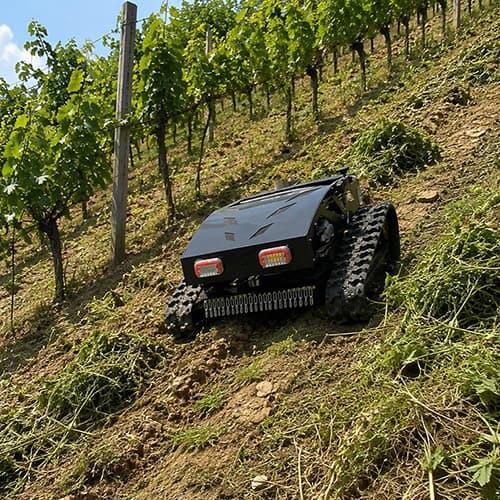
The lead operator, who already had six seasons of vineyard field experience, started his training on level pavement practising figure‑eight steering patterns on the first morning. By lunchtime he was comfortably working a 15‑degree slope situated between Block 3 and Block 4, holding steady horizontal cutting lines across the gradient. By day three he was operating on the challenging 28‑degree north‑facing slope — an area that previously only got brush‑hogged once per year because no crew wanted to take heavy equipment onto it.
The tracked RC mower held its position without sliding. Chevron track lugs bit firmly into dry clay soil. The operator stood forty feet away on safe flat ground, holding the transmitter and observing cut quality. No white‑knuckle tension, no nervous anticipation of slips. During that opening week, the unit completed 4.2 acres of slope work that normally took three labour‑intensive days with walk‑behind trimmers. This new job only consumed six total hours.
Before adding the tracked RC mower, their standard mowing workflow required two crew members: one ride‑on mower for flat vine rows and a walk‑behind unit for slopes and tight row ends. During peak growing seasons, every two‑week full mowing cycle across 22 acres took roughly 15 working hours. Out of that total, nine hours were spent on flat ground work, and six hours went to slopes, edges and zones inaccessible for the ride‑on mower.
After fully integrating the tracked RC mower into regular rotations, covering that same 22‑acre site dropped down to only six hours. The flat‑ground work still took nine hours, because the tracked mower does not outperform dedicated ride‑on units on level turf. Major savings appeared on difficult terrain: slope work fell from six hours down to just 45 minutes. Trimming edges and tight corners dropped from three hours to 1.5 hours, as the flail deck can mow to within six inches of vine trunks without operators needing to dismount equipment. Overall cycle time fell from 15 hours to 6 hours — a 60 % reduction.
Horizontal slope‑first cutting pattern
This delivered the single biggest improvement. Operators run the mower side‑to‑side along contour lines instead of travelling straight up‑and‑down inclines. Tracks maintain stable grade, and the flail deck ejects chopped vegetation downhill to act as natural organic mulch. On a 25‑degree slope, ride‑on machines will begin slipping sideways mid‑pass; the tracked unit maintains consistent progress without issues.
No repeated setup and teardown between rows
While ride‑on mowers have speed advantages on flat ground, every time they reach slopes, narrow corners or tight row ends, crew members have to climb off, reposition gear and fetch walk‑behind trimmers from trucks. The tracked RC mower transitions seamlessly between rows, slopes and edges. One machine, one operator, zero tool‑swap downtime.
High‑performance flail deck design
Vineyard ground cover consists of more than simple grass. It produces suckers, spring mustard weeds and bolting cover‑crop growth. Rotary decks easily get bogged down by thick vegetation. The flail system shreds all this material finely so it blends into the vineyard floor. Operators can maintain consistent speed and cutting height all along each row without pausing to clear clogged decks.
Single‑operator coverage for multi‑job tasks
The old workflow needed one driver for ride‑on mowers, a second crew member with walk‑behind on slopes and sometimes a third person handling handheld trimmers along edges. With the tracked RC mower, one operator completes all three types of work. Labour savings show in reduced headcount rather than just faster mowing speeds.
Expanded usable weather windows
Previously, rainfall on Tuesday meant slopes remained unusable until Friday. Thanks to chevron‑pattern lugs and low 3.5 psi ground pressure, this tracked mower can safely operate on slopes just 24 hours after rain, when ride‑on units would still slip and rut soil. The vineyard gained two extra viable mowing days per week through spring growing season.
Track wear is inevitable
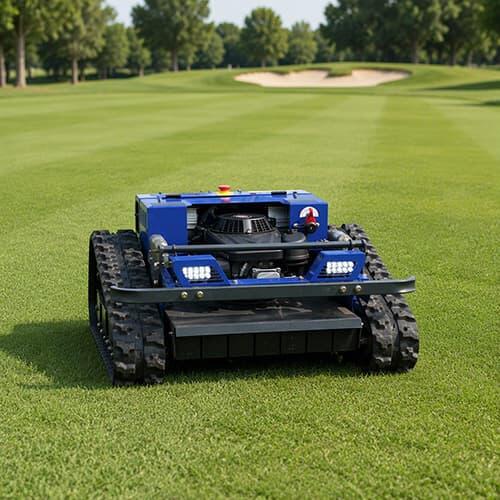
At 430 operating hours, one lug section tore off the left track while working over shale‑covered ground. They did not stock spare parts and suffered three full days of downtime waiting for delivery. The vineyard now keeps one complete spare track in‑house for $380. This small investment avoids costly downtime at $45 per‑hour operator labour plus uncontrolled grass regrowth.
Narrow rows still present physical limits
This tracked RC mower measures 38 inches in overall width. Vine rows with trunk‑to‑trunk spacing tighter than 42 inches cannot accommodate the machine. Six rows, accounting for twelve percent of total property acreage, still require manual hand‑trimming, and the operation planned for this limitation from the start.
Heavy rain still imposes hard limits
Though it performs far better in damp soil than older equipment, “better” does not mean “unlimited”. On fully saturated ground, tracks dig ruts instead of floating lightly over topsoil. Crews learned to avoid low‑lying blocks immediately following major storms. The machine can physically run there, yet protecting soil health takes priority.
Remote transmitter battery management matters
The remote consumes six AA lithium‑ion cells every 18‑22 operating hours. They maintain two fully‑charged spare battery sets. Once they skipped this preparation: remote power died mid‑row on a Thursday morning. The fail‑safe function worked perfectly — blades stopped and engine idled. Even so, the operator needed to walk all the way back to the truck for replacements while the machine sat unattended on a 12‑degree slope for twenty minutes. While not a safety hazard, it created annoying delays. Battery checks are now part of every pre‑shift checklist.
By season‑end, the vineyard logged 612 operating hours on their tracked RC mower. The engine received three scheduled services. Both tracks went through a second set of replacement lugs. Flail hammers got flipped once and fully replaced one time. The remote transmitter suffered two accidental drops but kept functioning reliably. The lead operator stated he would never return to using walk‑behind trimmers for slope work.
Vineyard management crunched final numbers: 60 % reduction in mowing cycle time, one less crew member required per mowing rotation, and zero slope‑related safety incidents. The machine achieved full payback within 11 months. Savings came not from pure mowing speed, but from completing work that previously could not get done on tight timelines, and accomplishing multi‑person tasks with only one operator.
The tracked RC mower did not make their flat vine‑row mowing any faster. What it accomplished was making all the difficult slope‑related work practical and routine. All the saved hours came from jobs crews used to avoid — work nobody even tracked formally because everyone disliked doing it. Once those tough assignments became standard workflow, total cycle time shrank dramatically. That 60‑percent efficiency gain was no marketing sales claim. It was measurable real‑world outcome after removing slopes, edges and tight corners from the list of difficult jobs.
If you want to watch real vineyard slope‑mowing field demonstrations, you can view case‑study‑related clips on our TikTok channel. You can also browse our tracked RC mower selections built for fruit‑farm and vineyard applications at our Made‑in‑China store page.
If you would like to discuss equipment matching for your own vineyard or orchard terrain, reach our engineering team via WhatsApp.
Get instant pricing, specs, and shipping details from our team.