
86 13686388557

Date:2026-06-29
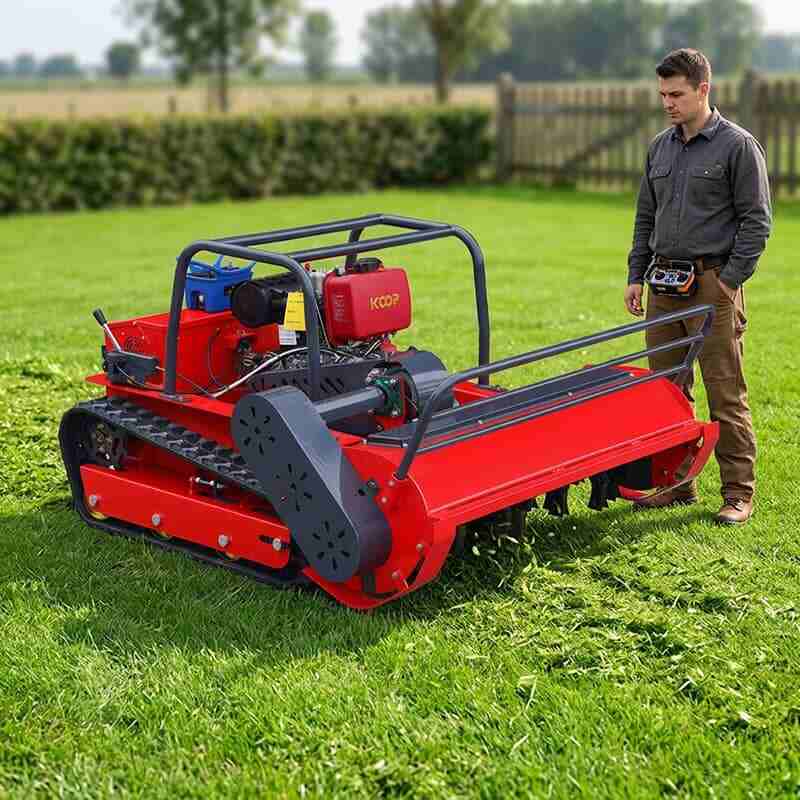
A remote control lawn mower is designed to work in environments where conventional mowers struggle, including steep hillsides, orchards, solar farms, roadside embankments, and rugged commercial landscapes. Because these machines frequently operate on uneven terrain, loose soil, and dense vegetation, they experience far greater mechanical stress than traditional lawn mowers.
If not maintained properly, even a high-quality crawler-type lawn mower will gradually reduce its cutting efficiency, cause premature wear of the tracks, overheat during continuous operation, or experience other mechanical failures. The good news is that most of these problems can be prevented through simple maintenance.
Based on our experience in manufacturing remote-controlled slope mowers, regular inspections and preventive maintenance are the most effective ways to extend machine lifespan, reduce repair costs, and ensure reliable performance throughout each mowing season.
Unlike the ordinary lawn mowers that operate on relatively flat lawns, the remote-controlled slope lawn mower needs to constantly climb slopes, descend slopes and make turns on uneven terrain. This puts continuous pressure on the tracks, the drive motor, the blades, the bearings and the electronic control system.
Regular maintenance helps to maintain climbing performance, improve cutting quality, protect expensive components, and ensure safe operation on steep slopes. For commercial users, regular maintenance can also minimize project delays caused by unexpected equipment failures.
Daily inspections are the simplest way to prevent long-term damage.
Remove mud, grass and stones from the tracks and cutting deck.
Inspect crawler tracks for cracks or excessive wear.
Check blade condition and replace damaged blades immediately.
Test steering, remote control response and emergency stop functions.
Wipe moisture from electrical components before storage.
Cleaning accumulated debris also improves cooling efficiency and prevents grass buildup from increasing engine or motor temperature.
Commercial operators should perform a more detailed inspection every week.
Adjust track tension according to the manufacturer's specifications.
Sharpen blades to maintain clean and efficient cutting.
Clean cooling vents and air filters.
Inspect batteries or fuel lines depending on the power system.
Check for loose bolts caused by continuous vibration.
Proper track tension is especially important. Tracks that are too loose may slip on hillsides, while overly tight tracks accelerate wear on rollers and drive components.
Every month, perform a comprehensive inspection of the mower.
Lubricate moving joints and bearings.
Retighten structural bolts.
Inspect electrical wiring and connectors.
Test safety sensors and emergency stop systems.
Clean dust from electrical control boxes.
These preventive measures help identify small problems before they develop into costly repairs.
If your mower will not be used for an extended period, prepare it properly before storage.
Wash and dry the entire machine.
Recharge batteries to approximately 50%–70% before storage.
Store the mower on a dry, level surface.
Release excessive track tension.
Cover the machine to protect it from dust and moisture.
Ignoring mud trapped inside crawler tracks.
Continuing to use worn blades.
Operating with loose track tension.
Skipping lubrication.
Leaving the mower outdoors for long periods.
Ignoring safety sensor inspections.
| Maintenance Item | Frequency |
|---|---|
| Machine Cleaning | After Every Job |
| Track Inspection | Daily |
| Blade Inspection | Weekly |
| Lubrication | Monthly |
| Safety System Test | Monthly |
How often should I replace crawler tracks?
Track lifespan depends on terrain and operating hours. Inspect them regularly and replace them once the tread becomes severely worn or damaged.
Can I wash the mower using a pressure washer?
Avoid spraying high-pressure water directly onto electrical components, bearings, and control boxes. Clean carefully and dry the machine before storage.
Why does my mower lose traction?
Traction loss is commonly caused by worn tracks, incorrect track tension, muddy terrain, or operating on slopes beyond the recommended working angle.
Whether you're maintaining equipment for orchards, solar farms, municipal landscaping, or roadside vegetation management, choosing the right maintenance plan can significantly improve performance and reduce operating costs.
For product recommendations or technical support, feel free to contact Cara.
WhatsApp: +86 15244567951
Watch real working videos:
https://www.tiktok.com/@mower102
Browse more models:
https://jinruihong.en.alibaba.com/
Company Profile:
https://xtbintl.en.made-in-china.com/
Get instant pricing, specs, and shipping details from our team.