
86 13686388557

Date:2026-06-30
Operating a remote control crawler lawn mower in wet grass requires much more than simply reducing travel speed. Moisture changes the traction between the tracks and the ground, increases the resistance of grass during cutting, and creates conditions that can quickly reduce mowing efficiency if the equipment is not operated correctly. Whether you are maintaining municipal landscapes, orchards, solar farms, highway embankments, or steep slopes, understanding the correct operating techniques will significantly improve cutting quality while protecting your investment in a commercial RC mower.
Compared with dry grass, wet vegetation is heavier, softer, and far more likely to stick to blades and cutting decks. Even premium crawler mowers equipped with waterproof electrical systems and high-traction crawler tracks can experience blade clogging, reduced airflow, uneven cutting, and excessive motor load if operators continue using dry-weather mowing techniques. For professional contractors, these issues not only reduce productivity but also increase maintenance costs and equipment downtime.
The good news is that modern remote control lawn mowers are specifically designed to handle demanding environments when they are operated correctly. By adjusting mowing parameters, choosing appropriate travel routes, and performing proper post-operation cleaning, operators can safely mow damp grass while maintaining excellent cutting performance and extending machine service life.
Morning dew, overnight humidity, light rainfall, and seasonal weather often leave grass damp long before mowing begins. Many commercial landscaping companies cannot simply postpone work until the lawn dries completely because project schedules remain tight throughout the year. Therefore, understanding how to safely operate a remote control crawler lawn mower in wet conditions becomes an essential skill rather than an optional technique.
Unlike conventional push mowers or ride-on machines, a crawler mower distributes its weight over a larger contact area, providing better grip and improved stability. However, reduced ground friction still affects steering accuracy, climbing ability, and braking performance. Operators who ignore these changes often experience unnecessary slipping, repeated mowing, increased fuel or battery consumption, and premature wear of tracks and blades.
Professional landscaping contractors generally agree that productivity in wet conditions should never be measured only by mowing speed. The real objective is maintaining consistent cutting quality while minimizing equipment wear. Experienced operators usually reduce their travel speed by 20%–40%, slightly increase cutting height, and inspect the cutting deck more frequently instead of trying to finish jobs as quickly as possible.
Field experience also shows that investing a few extra minutes in preparation can save hours of maintenance later. Before entering wet areas, professional crews inspect blade sharpness, track condition, waterproof seals, and emergency stop functions. These simple inspections greatly reduce the risk of unexpected shutdowns and expensive repairs during commercial operations.
Many international customers also like to compare real working performance before purchasing equipment. We regularly share field demonstrations, customer projects, and operating videos through ourTikTok channel, allowing buyers to see how our commercial RC mower performs on wet grass, steep hills, orchards, and challenging terrain under real working conditions.
Preparation is the foundation of safe mowing. Before starting the engine or powering on the machine, carefully inspect the entire working area. Identify puddles, muddy depressions, exposed stones, hidden branches, drainage channels, and areas where soil has become soft after rainfall. Even a high-performance slope mower should avoid waterlogged sections that may cause the crawler tracks to sink or lose traction.
Next, inspect the machine itself. Ensure that all battery compartments, controller housings, electrical connectors, and waterproof seals are properly secured. Examine the crawler tracks for excessive wear because smooth tracks provide significantly less grip on wet surfaces. Sharp blades are equally important. Dull blades tear wet grass instead of cutting it cleanly, increasing resistance and accelerating deck clogging.
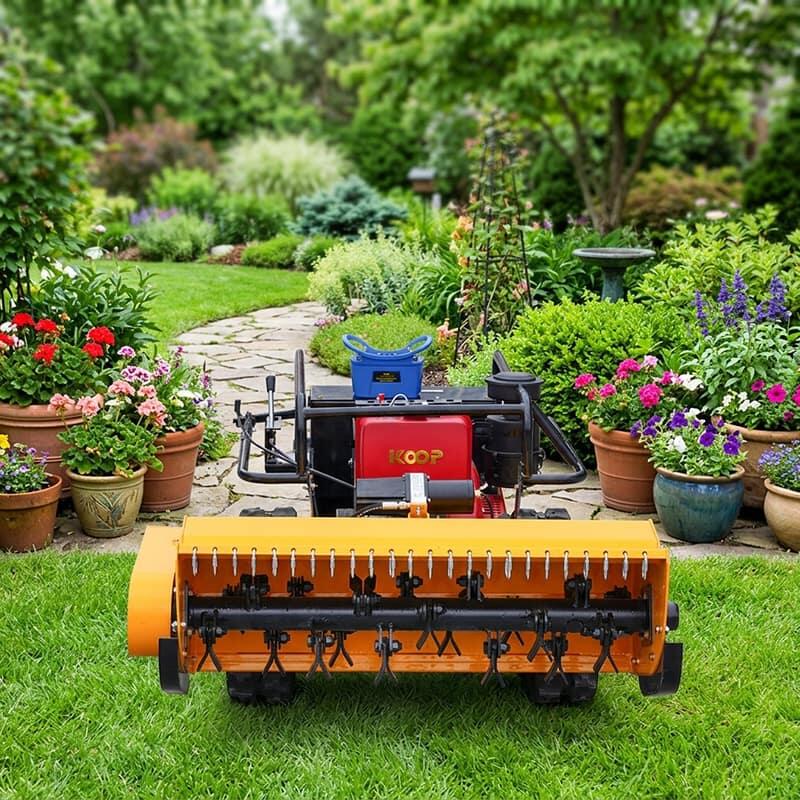
Professional operators also recommend increasing cutting height by approximately 0.5 to 1 inch compared with normal dry-weather settings. This simple adjustment improves airflow inside the cutting deck, reduces grass accumulation, and delivers a cleaner, more consistent finish while reducing strain on the drive system.
If you are unsure which remote control crawler lawn mower configuration is best suited for your application, our technical team can recommend appropriate models based on terrain, vegetation density, and annual workload. You are welcome tocontact us via WhatsAppto receive product catalogs, technical advice, videos, and customized quotations before making your purchasing decision.
Never drive directly into wet grass immediately after starting the machine. Instead, allow the crawler mower to idle on dry, level ground for several minutes while checking steering response, blade rotation, braking performance, and remote-control communication. This warm-up period ensures that all systems are functioning normally before the mower encounters the heavier cutting load created by damp vegetation.
Even experienced operators can make mistakes when mowing wet grass if they rely on habits developed during dry-weather operations. Because moisture significantly changes traction, cutting resistance, and grass behavior, using the same operating method may reduce mowing efficiency while increasing equipment wear. Understanding these common mistakes can greatly improve the performance and lifespan of your remote control lawn mower.
One of the most frequent errors is driving too fast. Wet grass creates lower friction between the crawler mower tracks and the ground. Excessive speed increases the possibility of sliding during turns or while climbing slopes. Instead of trying to finish the job quickly, maintaining a slow and steady travel speed produces cleaner cutting results and protects both the transmission system and the cutting deck.
Another common problem is lowering the cutting height too much. Short cutting heights force the blades to process a larger volume of wet grass, which can quickly clog the mowing deck. Keeping the cutting height slightly higher allows better airflow underneath the deck, helping grass discharge smoothly and reducing motor load. This simple adjustment can significantly improve mowing quality when using a commercial RC mower in damp environments.
Ignoring small blockages is another mistake that often results in larger mechanical issues. If operators notice vibration, unusual sounds, or reduced discharge performance, they should immediately stop the machine and remove accumulated grass. Continuing to operate with a partially blocked deck increases blade resistance, raises motor temperature, and may eventually damage bearings, belts, or blade components.
Some operators also underestimate the risks of working on saturated soil after heavy rainfall. Although a slope mower equipped with crawler tracks provides excellent traction, extremely soft ground can still cause the tracks to sink into the soil. This not only reduces working efficiency but also leaves deep track marks that may require additional landscape repair. Professional contractors usually postpone mowing until standing water has disappeared and the soil regains sufficient firmness.
Maintenance after wet-weather operation is just as important as proper mowing techniques. Moisture, mud, and wet grass residue can accelerate corrosion and reduce the service life of many mechanical components if they are not removed promptly. Developing a consistent cleaning routine helps maintain the long-term reliability of every remote control crawler lawn mower.
Begin by cleaning the entire chassis, crawler tracks, rollers, and cutting deck using low-pressure water or compressed air. Remove every piece of wet grass that remains around the blade spindle, discharge opening, and ventilation areas. Grass residue dries quickly and becomes difficult to remove later, while trapped moisture encourages rust formation and microbial growth.
After cleaning, wipe all exposed electrical connectors with a dry cloth and inspect waterproof seals around the battery compartment and control box. Although most professional commercial RC mowers feature IP65 or IP67 waterproof protection, routine inspection helps prevent unexpected electrical failures during future operations.
Next, inspect blade sharpness, crawler track tension, and all visible fastening bolts. Wet terrain often generates stronger vibration than dry lawns, which can gradually loosen mechanical connections. A quick inspection after every wet mowing session prevents small problems from developing into expensive repairs.
Finally, store the machine inside a dry, well-ventilated building instead of leaving it outdoors overnight. Proper storage prevents condensation from affecting electrical components and extends the lifespan of batteries, bearings, and hydraulic systems.
| Operation Item | Dry Grass | Wet Grass |
|---|---|---|
| Travel Speed | Medium speed | Slow constant speed |
| Cutting Height | Standard setting | Increase 0.5–1 inch |
| Overlap Width | 3–5 cm | 8–10 cm |
| Slope Safety | Maximum rated slope | Reduce by 8–10° |
| Cleaning Frequency | Routine | Frequent inspection required |
If you would like to see how a remote control crawler lawn mower performs in wet grass, steep slopes, and rough terrain, you can visit ourTikTok channel. We regularly publish real customer projects, product demonstrations, and field operation videos that show actual mowing performance under different environmental conditions.
As an experienced manufacturer of commercial RC mowers, we provide OEM and ODM services for distributors, importers, equipment rental companies, and landscaping contractors worldwide. Our production capabilities, certifications, and export experience can also be viewed through our officialMade-in-China profile, where international buyers can learn more about our factory and product range.
Choosing the right remote control lawn mower depends on your mowing area, terrain gradient, vegetation density, and daily workload. If you need assistance selecting the most suitable model, our engineering team can provide one-to-one recommendations based on your project requirements. Simply contact us throughWhatsAppto receive product catalogs, technical specifications, videos, and customized quotations before placing your order.
Q1: Can a remote control lawn mower mow wet grass safely?
Yes. Professional waterproof models can safely handle damp grass when operators follow recommended speed, cutting height, and safety guidelines.
Q2: Why does wet grass clog the mower more easily?
Because moisture causes grass clippings to stick together, reducing airflow inside the cutting deck and increasing the likelihood of blockage.
Q3: Should I mow immediately after heavy rain?
No. Wait until standing water disappears and the soil becomes stable enough to support crawler tracks without sinking.
Q4: How often should blades be inspected after wet mowing?
Inspect blades after every wet mowing session to ensure they remain sharp and free from wrapped grass or debris.
Q5: Does proper maintenance really extend machine life?
Absolutely. Consistent cleaning and inspection significantly reduce wear on motors, blades, bearings, crawler tracks, and electrical components.
Operating a remote control crawler lawn mower in wet grass requires more than simply reducing speed. Professional operators combine proper route planning, higher cutting heights, wider overlap, routine maintenance, and thorough post-operation cleaning to achieve excellent mowing quality while protecting valuable equipment. Whether maintaining municipal landscapes, solar farms, orchards, highway embankments, or steep hillsides, following these best practices will improve efficiency, reduce maintenance costs, and maximize the long-term return on your investment in a high-performance crawler mower.
Get instant pricing, specs, and shipping details from our team.