
86 13686388557

Date:2026-09-14
On a 30-degree embankment, the mower deck is not the first thing that decides the job. Traction and stability come first. But once the machine is holding the slope, the cutting head becomes the difference between a clean pass and a long, expensive afternoon.
Flail and rotary decks are built around two different ideas of what a blade should do. A rotary uses a single high-speed spindle with one or two long blades swinging beneath the deck. A flail uses a horizontal rotor fitted with dozens of small pivoting hammers or knives. On flat lawn, the difference is mostly about finish. On a slope, it becomes a question of weight, safety, debris, and what happens when the ground is not uniform.
It also matters that the slope changes how the deck behaves. A deck that sits perfectly on flat ground may scalp, bounce, or dig in once the chassis is tilted. The cutting head is no longer moving horizontally through even grass. It is moving across contours, ruts, and changes in grade. That is why a deck choice that looks academic on paper becomes very practical once the machine is working on the face of a slope.
The answer is not that one is better. Each deck is suited to a different kind of rough ground, and that distinction becomes especially important when a remote control lawn mower is being used on steep terrain.
A rotary deck is simple: an engine or PTO spins a vertical shaft, and two rigid blades cut the grass at high tip speed. The result is the familiar lawn finish, and the design has decades of refinement behind it. The blades are large and exposed, relying on lift and suction to stand the grass up before cutting it.
A flail deck works differently. A horizontal rotor turns inside a closed housing, with short hammers or Y-knives mounted on pivoting links. Each hammer can swing away when it encounters a rock, root, or ridge instead of taking the impact directly. The cutting action is therefore less dependent on suction and more on repeated, controlled impact from multiple small cutting tools.
From an engineering and maintenance perspective, this difference matters because the deck is dealing with much more than grass on an unmanaged slope. The machine may encounter stones hidden under vegetation, woody stems, roots, ruts, or material left from previous cutting operations.
On a slope, those mechanical differences turn into four practical questions:
How the deck handles uneven ground and hidden obstacles.
What happens to the debris after it is cut.
How much the deck weighs, and where that weight sits.
How long the cutting parts survive without adjustment or replacement.
THE SHORT VERSION A rotary deck wants uniform ground and clean material. A flail deck is built for ground that is neither. That single distinction explains much of the choice on steep, rough terrain.
| Factor | Rotary deck | Flail deck |
|---|---|---|
| Cutting action | 2 long rigid blades, high tip speed | Dozens of pivoting hammers/knives |
| Best material | Grass, light weeds, clean turf | Heavy brush, brambles, stalks, rough growth |
| Finish quality | Clean, lawn-like | Coarser, mulched finish |
| Obstacle behavior | Blade strike can bend/damage | Hammers swing clear, self-protecting |
| Debris / discharge | Strong sideways discharge | Contained, mulched in housing |
| Deck weight | Lighter, simpler | Heavier, more moving parts |
| Wash-out & corrosion | Open, easy to clean | Housing traps material; needs attention |
| Wear parts cost | Blades inexpensive, few of them | Many hammers; replacement adds up |
| Slope fit | Good on even, maintained slopes | Strong on rough, uneven, overgrown slopes |
For a commercial RC mower, the table above should be read together with the actual terrain. Deck performance is not independent of the chassis. A lighter rotary may be preferable when keeping machine weight low is critical, while a properly matched flail deck can be the better choice when the cutting route includes brush, rocks, and neglected vegetation.
The practical difference usually becomes obvious during field testing. On clean grass, both systems can produce a satisfactory result. Once the route includes mixed vegetation and uneven ground, the way the cutting head handles impacts and cut material becomes much more important than the nominal cutting speed alone.
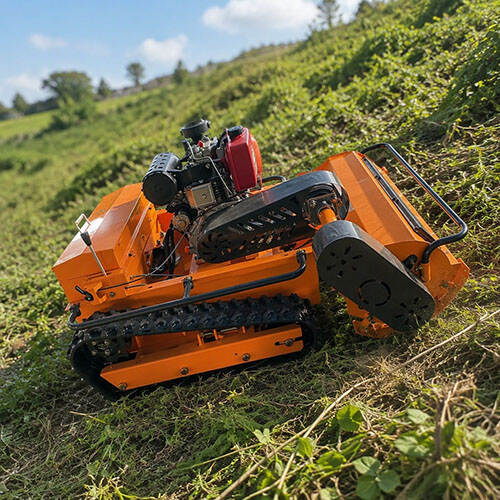
On a maintained grass slope with an even grade, a rotary deck is hard to beat for finish and simplicity. But steep terrain is often not maintained grass. It may be a roadside verge, drainage ditch, embankment, pasture edge, or land that gets cut only a few times a year. That is where the flail earns its weight. The first pass on neglected ground is rarely uniform, and the flail is designed for that kind of irregular material rather than being easily disrupted by it.
The advantages become more relevant as the ground gets worse:
Obstacles: Rocks, roots, ruts, and buried debris are routine on unmanaged slopes. Pivoting hammers can absorb the impact and move away from the obstacle instead of transferring the full shock directly into the rotor system.
Material: Thick stalks, bramble, and brush are handled differently from ordinary grass. A flail cuts and recuts the material inside the housing, reducing the tendency for long vegetation to behave like a rope around a conventional cutting system.
Discharge: Cut material stays largely inside the housing and is dropped close to the ground. On a slope, that matters because it reduces the chance of cut debris being thrown a long distance down the face.
Coverage: A flail is more willing to take a slope that has not been touched in weeks or months, which is often exactly the type of slope being brought back into regular maintenance.
ROUGH-GROUND RULE If the slope is overgrown, rocky, or cut only occasionally, the flail is usually the more practical engineering choice. It is not about producing a finer lawn finish. It is about cutting reliably where the ground is hostile.
The rotary is far from obsolete on slopes. It remains the better tool whenever the goal is a clean, regular finish on ground that is already in good condition. For maintained grass, the simpler cutting system can be easier to service and can keep overall machine weight lower.
Rotary advantages hold when:
The slope is grass-only and cut on a routine schedule.
A manicured appearance matters — parks, estates, and visible roadside turf are typical examples.
The deck needs to be light to help the chassis stay balanced.
Budget and simplicity matter more than brush capacity.
A light rotary deck also asks less of the machine itself. On a smaller slope platform, that can be the difference between a chassis that holds traction and one that does not. This is particularly relevant when the mower has to transition between flat ground and a slope, because unnecessary deck weight can affect how the machine responds as the grade changes.
There is also a practical maintenance advantage. A rotary deck has relatively few cutting components, so routine blade inspection, sharpening, and replacement are straightforward. For contractors working mainly on clean grass, that simplicity can outweigh the additional rough-ground capability of a flail.
| Limit | Rotary | Flail |
|---|---|---|
| Maintenance | Sharpen/replace blades; simple | Inspect many hammers; replacement is ongoing |
| Cleaning | Hose out deck after use | Housing needs thorough clearing, especially with wet material |
| Weight penalty | Light, follows contours easily | Heavier; can challenge slope chassis balance |
| Fuel / power | Generally lower draw | More rotating mass; needs adequate power |
These limitations are worth considering before ordering a flail simply because the terrain is steep. A flail deck is not automatically the right choice just because a slope has a high angle. If the vegetation is clean grass and the surface is maintained, the additional deck weight and maintenance work may provide little practical benefit.
The same applies to power. A heavier flail rotor needs a chassis and power system that can carry and drive it without strugglA simple decision rule
The choice becomes much easier once the slope is described honestly. Two questions are enough to narrow it down.
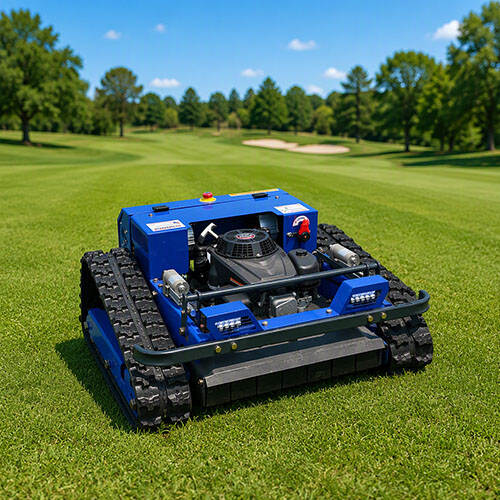
Grass only, cut regularly → rotary.
Mixed growth, brush, bramble, or cut rarely → flail.
Even, clean, maintained → rotary.
Rocky, rutted, rooted, overgrown → flail.
DEFAULT CHOICE When in doubt on steep, rough terrain, choose the flail. It will handle more than the rotary and usually tolerate irregular material better. Move to a rotary when the ground is consistently clean enough to reward its lighter design and cleaner finish.
There is one important qualification: slope angle should not be evaluated by itself. A 30-degree clean grass slope and a 20-degree rocky embankment can place very different demands on a tracked mower. Surface condition, moisture, vegetation, machine weight, track design, and the direction of travel all affect the actual working conditions.
Deck choice also has to fit the machine carrying it. A tracked slope platform usually has the stability to carry a heavier flail. A lighter wheeled or remote platform may need the rotary to keep the center of gravity low and the chassis balanced on the face. The wrong pairing can undo a good deck choice: a heavy flail on an under-rated chassis will hurt traction and slope stability, while an oversized rotary on rough ground may spend more time damaged than cutting.
Three fit checks are worth making before purchase:
Confirm the manufacturer rates the chassis for the deck weight, especially at full slope.
Check that deck float and skid shoes suit the contour — a great deck still scalps if it cannot follow the ground.
Make sure service access is realistic; a flail needs room to inspect hammers and rotor links.
The same fit logic applies to the remote-control setup. A heavier flail changes how the machine responds to slope transitions, so the operator should test it on the steepest recurring face before committing to a full route. A deck that keeps the chassis balanced through a contour change is more valuable than one that merely has the highest cutting capacity on paper.
For commercial users, service access deserves particular attention. A flail deck may require regular inspection of hammers, mounting points, rotor condition, belts or drive components, and the inside of the housing. These checks are much easier when the machine has been designed with practical access rather than treating maintenance as an afterthought.
For steep terrain, the flail is the more capable default. It is heavier, needs more maintenance, and will not give a putting-green finish, but it handles the rough, uneven, overgrown ground that actually shows up on slopes. The rotary remains the right call for clean, grass-only, well-maintained faces where appearance and simplicity matter most.
Pick the deck for the worst day on the route, not the best one. If the slope is ever rocky, overgrown, or cut late in the season, the flail can pay for itself through fewer interruptions and less damage. If it stays clean grass week after week, the rotary keeps things simple and provides the cleaner finish.
BOTTOM LINE Flail for rough slopes, rotary for clean ones. Let the ground — not the brochure — make the call.
If you are deciding between a flail and rotary configuration for a remote control lawn mower, send us the slope angle, vegetation type, approximate cutting width, and a few photos or a short video of the terrain. Those details are far more useful for configuration than simply choosing the deck with the highest advertised power.
You can also contact our team on WhatsApp to discuss the mower configuration, cutting head, and working conditions before making a purchase.
For rough, overgrown, rocky, or uneven slopes, a flail is generally the more suitable option because its pivoting hammers are better suited to irregular vegetation and hidden obstacles. A rotary remains a strong choice for clean, maintained grass where finish quality and low deck weight are priorities.
Yes, provided the mower chassis and cutting deck are rated for the terrain and the slope is suitable for the machine. A clean, maintained grass slope can be a good application for a rotary deck. The actual working limit should come from the complete machine configuration rather than the cutting deck alone.
A flail deck uses a horizontal rotor, housing, and many individual hammers or knives, so the cutting assembly normally contains more material and moving components. That additional weight can improve the deck's ability to handle rough vegetation, but it also means the supporting mower chassis must be properly matched.
A flail mower is generally better suited to mixed vegetation such as heavy weeds, brambles, stalks, and rough growth. The pivoting cutting tools and enclosed rotor are designed around this type of material, while a rotary deck is better suited to grass and lighter vegetation on cleaner ground.
Usually, yes. A flail deck has more individual cutting components, so the operator needs to inspect hammers, mounting points, the rotor, and the housing more regularly. The advantage is that the cutting system is designed for rougher working conditions, so the additional maintenance can be justified when the route regularly includes difficult vegetation and uneven terrain.
Check the deck weight, machine power, chassis stability, track or wheel configuration, deck width, deck float, skid shoes, service access, and the manufacturer's working limits. The flail should be evaluated as part of the complete RC mower rather than as an independent attachment.
Get instant pricing, specs, and shipping details from our team.