86 13686388557

Date:2026-05-04
When choosing a remote control lawn mower, one of the most critical factors to consider is its ability to handle slopes safely and efficiently. Many buyers focus only on power or price, but slope capability and stability are what truly determine whether a machine can perform reliably in real-world conditions.
Whether you are managing hillsides, roadside areas, or uneven terrain, understanding how slope performance works will help you select the right lawn mower for your needs.
Slope capability refers to the maximum incline a remote control lawn mower can handle while maintaining stability and traction. This is influenced by several factors, including machine weight, center of gravity, and drive system design.
A well-designed remote controlled mower will distribute weight evenly to prevent tipping and ensure consistent contact with the ground.
A low center of gravity is essential for stable operation on slopes. Machines designed with this feature are less likely to tip over when working on steep terrain.
Many professional-grade lawn mower models are built with reinforced structures to improve balance and safety during operation.
The choice between tracks and wheels plays a major role in slope performance. A crawler-based remote control lawn mower provides better traction and grip, especially on loose or wet surfaces.
Tracked systems distribute weight across a larger surface area, reducing pressure on the ground and improving overall stability.
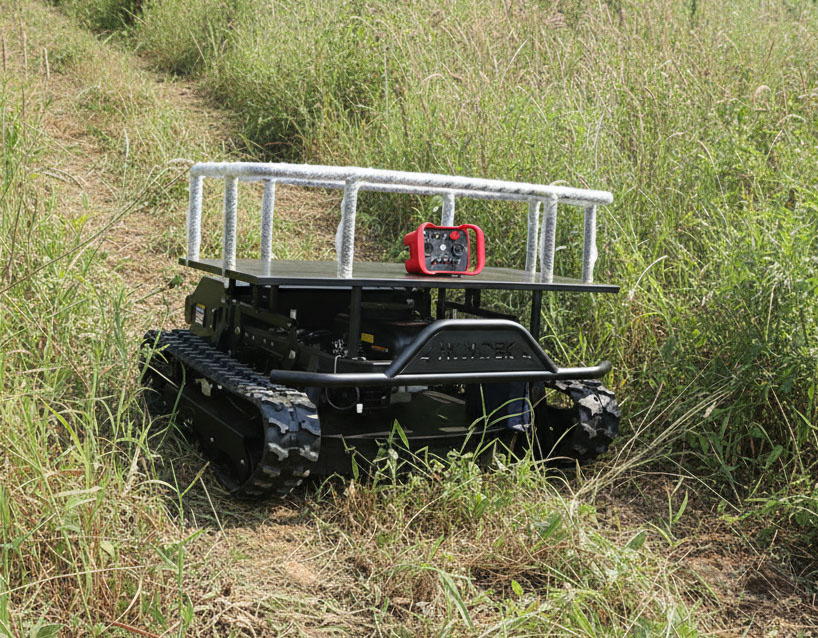
Strong traction is necessary to prevent slipping during operation. A remote control lawn mower with high-quality tracks or tires can maintain grip even on challenging surfaces.
This is particularly important when working on wet grass, loose soil, or uneven terrain where traditional machines may struggle.
Adequate power is essential for maintaining performance on slopes. A high-torque lawn mower can climb inclines without losing efficiency or slowing down significantly.
For heavy-duty applications, selecting a machine with sufficient engine or motor output ensures reliable operation in demanding environments.
Understanding specifications is important, but real-world performance matters even more. On platforms like TikTok, you can see how different remote control lawn mower models handle slopes and uneven terrain in practical situations.
These demonstrations provide valuable insight into stability, traction, and overall performance.
Selecting the right machine depends on your specific working conditions. For steep slopes and rough terrain, a crawler-type remote control lawn mower is usually the best option.
You can explore different models and configurations through our Alibaba store, where various options are available based on slope requirements and application needs.
If you need help choosing the right equipment, you can contact our manager Cara via WhatsApp (+86 15244567951) for professional recommendations tailored to your project.
Slope capability and stability are key factors when evaluating a remote control lawn mower. By understanding how design, traction, and power influence performance, you can make a more informed decision.
Choosing the right machine not only improves efficiency but also ensures safer operation in challenging environments.
Get instant pricing, specs, and shipping details from our team.