
86 13686388557

Date:2026-05-19
For landscaping contractors, commercial real estate maintenance companies, and bulk equipment buyers, investing in a commercial remote control lawn mower can significantly improve mowing efficiency while reducing labor costs and operational risks on steep or rugged terrains.
However, many companies only focus on production efficiency but neglect daily maintenance. If not properly maintained, even high-quality remote-controlled lawn mowers may gradually experience problems such as unstable operation, shortened battery life, reduced climbing performance, overheating, and result in costly downtime losses.
Professional maintenance not only extends the service life of a robotic lawn mower to 6–8 years but also ensures consistent cutting performance across all seasons. Proper maintenance reduces the frequency of repairs, lowers operating costs, and safeguards the long-term investment value of the equipment.
Many commercial buyers today also compare real operating performance through outdoor demonstration videos before purchasing equipment. Some working demonstrations of crawler lawn mower models can be found on professional mower demonstration accounts, helping contractors better understand real terrain adaptability and mowing efficiency.
Core Practical Viewpoint: Most failures of commercial lawn mower equipment are not caused by manufacturing defects, but by irregular maintenance habits and long-term overload operation. Commercial-grade machines operate under much higher intensity than residential mowers, making scheduled inspection of batteries, navigation systems, crawler tracks, cutting blades, and electrical components essential for long-term reliability.
Daily cleaning is one of the most important but commonly ignored maintenance steps for a remote control lawn mower. Grass debris, mud, weeds, and moisture can gradually damage important components if not cleaned regularly.
Clean the cutting deck and blade area: Remove accumulated grass and debris underneath the mower deck and around the blades. Long-term buildup affects cutting quality and accelerates blade wear.
Wipe sensors and navigation lenses: Use a dry soft cloth to clean obstacle avoidance sensors and camera lenses. Dirty sensors may affect the stability of a smart lawn mower and cause incorrect obstacle detection.
Keep the chassis dry: After operating on wet lawns or rainy terrain, dry the machine in a ventilated area to prevent moisture damage inside electrical systems.
Inspect the remote controller: Check the remote control buttons, display screen, and emergency stop functions to ensure safe operation.
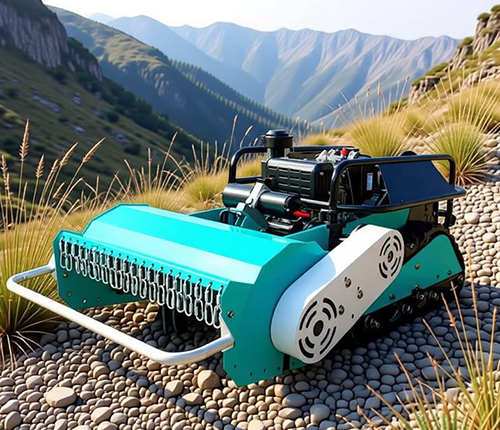
Commercial landscaping businesses operating industrial lawn mower equipment daily should complete a detailed inspection every week to identify hidden problems before they become expensive failures.
Check blade sharpness and tightness: Loose blades create vibration while dull blades increase motor workload and power consumption.
Inspect battery connectors: Ensure charging ports and power cables are secure and free from oxidation or corrosion.
Lubricate moving components: Apply professional lubricating oil to wheel shafts, crawler systems, and rotating joints to reduce wear and noise.
Test emergency stop systems: Confirm both onboard and remote emergency stop functions respond immediately.
Check tire or crawler wear: Excessive wear reduces traction and slope climbing stability.
Many international distributors purchasing commercial remote control lawn mower equipment also compare technical specifications, OEM support, and replacement parts availability through professional B2B supplier platforms such as Made-in-China commercial mower suppliers.
Monthly maintenance is especially important for businesses operating commercial mower equipment continuously in outdoor commercial environments.
Perform full battery charge and discharge cycles: This helps maintain lithium battery activity and slows long-term capacity degradation.
Inspect internal wiring systems: Continuous vibration may cause hidden cable wear or loose electrical connections.
Calibrate remote control signals: Signal recalibration helps maintain stable remote operation and minimizes connection interruptions.
Clean cooling systems: Remove dust from heat dissipation channels to prevent overheating during summer operation.
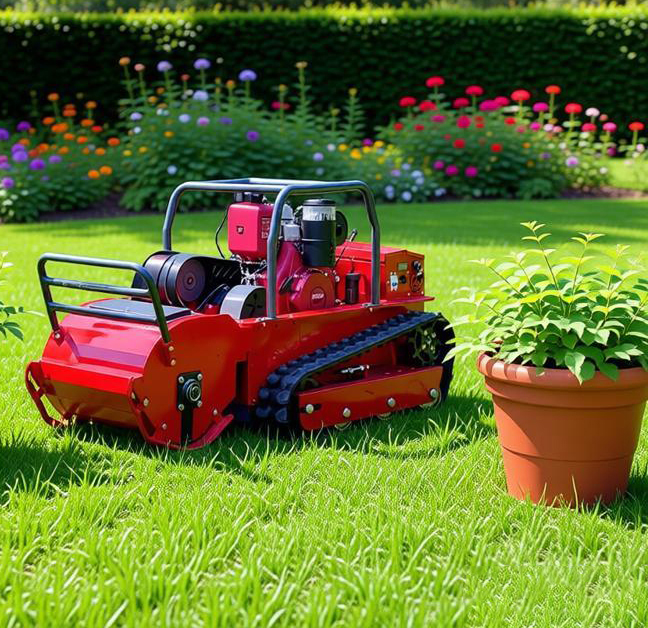
Different weather conditions throughout Europe and North America create different maintenance challenges for remote controlled lawnmower equipment.
| Maintenance Period | Focus Maintenance Content | Commercial Use Benefit |
|---|---|---|
| Summer High Temperature | Inspect cooling systems, reduce continuous overload operation, and verify waterproof protection. | Prevents overheating shutdown and battery heat aging. |
| Rainy Season | Strengthen moisture protection and inspect sealing components regularly. | Reduces electrical failure caused by water intrusion. |
| Autumn Peak Lawn Season | Focus on blade replacement and battery endurance inspection. | Supports high-frequency commercial mowing operations. |
| Winter Storage Season | Deep clean the machine, fully charge the battery, and store in a dry indoor warehouse. | Protects components during long-term storage. |
Do not clean a remote control crawler lawn mower directly with a high-pressure water gun because water may damage sensors and electrical systems.
Do not use incompatible chargers that may damage lithium batteries and create safety risks.
Avoid operating continuously on slopes beyond the machine’s rated climbing angle.
Do not store equipment outdoors in humid or exposed environments for long periods.
Some global wholesale buyers also compare customization capability, spare parts support, and product configurations through platforms such as Alibaba International commercial mower suppliers before selecting long-term OEM cooperation partners.
Q1: How often should commercial mower blades be replaced?
Under normal commercial operation, blades should generally be replaced every 3–4 months. Machines frequently operating on rocky ground or heavy weeds may require replacement every 2 months.
Q2: How can I tell if the battery needs replacement?
If operating time decreases by more than 30% compared with original performance after full charging cycles, the battery is likely aging and should be replaced.
Q3: Can ordinary workers complete daily maintenance?
Yes. Most cleaning and inspection procedures for a robotic lawn mower can be completed without advanced technical training.
Q4: Will regular maintenance affect warranty coverage?
Standard cleaning and inspection procedures will not affect official warranty coverage. Unauthorized modifications may void warranty service.
Q5: What is the expected lifespan with proper maintenance?
With professional maintenance and proper operating habits, a commercial remote control lawn mower can maintain stable performance for 6–8 years or longer.
Proper maintenance is essential for ensuring long-term reliability, safety, and operational efficiency of a commercial remote control lawn mower. As labor costs continue rising in the landscaping industry, more businesses rely on high-performance remote lawn mower equipment to improve productivity and reduce operational pressure.
Establishing professional maintenance procedures helps reduce repair costs, minimize downtime, extend equipment lifespan, and improve overall project efficiency. Companies that maintain their commercial lawn mower equipment properly gain stronger operational stability and long-term competitiveness in the landscaping market.
If you need complete maintenance manuals, OEM support, spare parts supply, or wholesale cooperation for commercial remote control lawn mower products, professional supplier platforms and real equipment demonstration channels can help buyers better evaluate machine quality and long-term service capability.
Get instant pricing, specs, and shipping details from our team.