
86 13686388557

Date:2026-07-09
Choosing the correct cutting height is one of the most important decisions when mowing sloped terrain. While many operators focus on engine power or traction, the height of the mower deck has an equally significant impact on grass health, soil stability, mowing efficiency, and overall safety. Whether you're maintaining residential hillsides, vineyards, orchards, municipal embankments, or commercial landscapes, selecting the proper cutting height helps your remote control lawn mower deliver cleaner results while protecting the slope itself.
Unlike flat lawns, lawns situated on slopes face harsher growing conditions. Rainwater runs off quickly, the soil dries out faster, and sunlight exposure is often uneven; furthermore, mowers must constantly contend with gravity. Cutting the grass too short exposes the soil, weakens the root system, and exacerbates soil erosion. Conversely, allowing the grass to grow too long reduces mowing efficiency and fosters the growth of weeds or pests. Finding the optimal mowing height is key to maintaining the lawn's long-term health.
Modern remote control crawler lawn mower models make hillside mowing considerably safer than traditional ride-on machines, but even professional equipment performs best when paired with correct cutting-height settings. In this guide, we'll explain how slope angle, grass species, seasonal changes, soil conditions, and mowing frequency influence the ideal cutting height while providing practical recommendations used by professional landscaping contractors.
Professional landscaping companies rarely use the same mowing height year-round. Instead, they adjust mower heights based on seasonal growth patterns, rainfall, terrain conditions, and the lawn's recovery rate. This flexible strategy not only promotes a healthier lawn but also minimizes turf damage and soil erosion, thereby reducing long-term maintenance costs.
Commercial users operating on highways, solar power plants, vineyards and municipal slopes usually choose a slightly higher lawn cutting height than residential users. Although the taller grass may require more frequent trimming, it significantly promotes root development, reduces runoff after heavy rain, and helps the slopes remain stable in the face of climate change.
You can watch real hillside mowing demonstrations and practical operating techniques on ourofficial TikTok page, where commercial users regularly share real working footage using professional crawler mower equipment.
On flat lawns, an incorrect cutting height may only affect appearance for a few weeks. On hillsides, however, every mowing session directly influences slope stability, water drainage, and grass recovery. Taller grass provides a protective canopy that softens rainfall impact before water reaches the soil surface. This simple protection significantly reduces runoff velocity and minimizes erosion during heavy storms.
Maintaining additional leaf length also encourages deeper root development. Strong roots anchor soil particles together, making slopes more resistant to washouts, drought, and seasonal temperature fluctuations. Healthy root systems allow grass to recover faster after mowing while naturally suppressing weed growth.
Another major benefit is preventing scalping. Uneven ground frequently causes mower decks to contact high spots unexpectedly. Keeping the cutting height slightly higher reduces the risk of exposing bare soil, which can quickly become a starting point for erosion, weeds, and turf decline.
For operators using a commercial RC mower, selecting the proper cutting height also improves machine stability. The mower encounters fewer sudden impacts from hidden rocks or uneven ground, reducing vibration and extending the lifespan of blades, bearings, and suspension components.
Slope is always the primary factor determining the grass cutting height. As the terrain slope increases, the lawn plays a more crucial role in stabilizing the soil and preventing slope erosion.
For gentle slopes with a gradient of less than 15 degrees, a mowing height of 2.5 to 3 inches generally strikes a good balance between aesthetics and healthy turf growth. Most residential lawns fall into this category and can be maintained using a standard mowing schedule.
For gentle slopes with an incline of 15 to 30 degrees, the grass height can be slightly increased to approximately 3 to 3.5 inches. Allowing the grass to grow longer strengthens the root system while reducing the speed of surface runoff following rainfall.
Steep slopes with an incline exceeding 30 degrees require stricter protection. Most landscape experts recommend keeping the lawn height between 3.5 and 4 inches. A higher grass crown can prevent soil erosion, enhance soil water retention, and provide additional safety during mowing.
On steep slopes that exceed the safe operational limits of machinery, manual trimming or the use of specialized equipment may be the safest solution. Even in such cases, maintaining longer grass cover remains crucial for long-term slope protection.
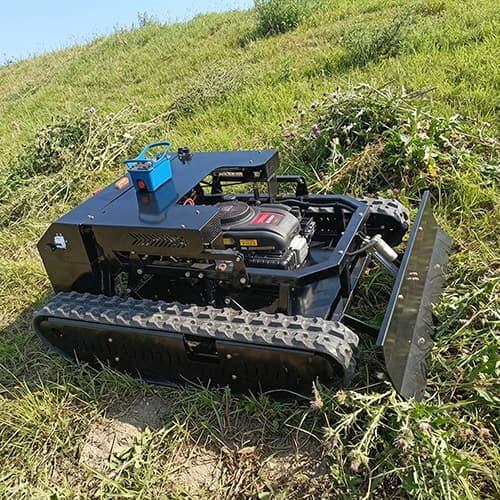
Not all turf varieties respond the same way to mowing. Choosing the correct cutting height according to grass species is essential for maintaining healthy growth on sloped terrain. Grass that is cut too short loses valuable leaf area for photosynthesis, while grass left excessively long may become weak and difficult to maintain.
Cool-season grasses such as Kentucky Bluegrass, Tall Fescue, and Fine Fescue generally perform best on hillsides when maintained between 3 and 4 inches. Their deeper root systems help stabilize loose soil while improving drought resistance during summer months.
Warm-season grasses including Bermuda Grass, Zoysia Grass, and Bahia Grass naturally tolerate shorter mowing heights. However, even these varieties should be maintained slightly taller on slopes than on flat lawns. A cutting height between 2.5 and 3 inches usually provides the best balance between appearance, root protection, and erosion control.
Regardless of grass variety, always follow the one-third rule. Never remove more than one-third of the total grass height during a single mowing session. This simple practice minimizes stress, encourages healthy regrowth, and keeps your remote control crawler lawn mower operating more efficiently.
Professional lawn care companies rarely keep one cutting height throughout the year. Seasonal weather changes directly affect grass growth rates, moisture retention, and root development. Adjusting your mower deck throughout the seasons produces healthier turf while reducing maintenance costs.
During spring, grass grows rapidly thanks to mild temperatures and abundant rainfall. A medium cutting height between 2.5 and 3.5 inches maintains an attractive appearance while preventing excessive thatch buildup.
Summer introduces higher temperatures and longer periods of drought. Increasing the mowing height to approximately 3.5 to 4 inches provides additional shade for the soil, reduces moisture evaporation, and protects roots from heat stress. Taller grass also requires less irrigation during dry periods.
As temperatures cool in autumn, grass resumes active growth. Gradually lowering the cutting height to around 3 inches encourages healthy recovery before winter while maintaining adequate slope protection.
During winter dormancy, avoid cutting the lawn excessively short before the cold season arrives. Leaving approximately 3 to 3.5 inches of residual grass helps protect crowns from frost while reducing erosion caused by winter rainfall and snowmelt.
The condition of the soil beneath your lawn is just as important as the grass itself. Loose sandy soil, shallow topsoil, or newly established slopes require additional vegetation coverage to prevent erosion. Maintaining taller grass allows roots to penetrate deeper while holding soil firmly in place.
In contrast, mature lawns with compact, nutrient-rich soil can often tolerate slightly lower mowing heights without sacrificing stability. Nevertheless, excessively aggressive mowing should still be avoided on any hillside.
Shaded slopes deserve special attention. Grass growing beneath trees or beside buildings receives less sunlight and produces less energy through photosynthesis. Increasing the cutting height by approximately half an inch allows more leaf surface to remain, supporting healthier growth in low-light environments.
Maintaining proper soil moisture through correct mowing height also benefits beneficial microorganisms, helping create stronger, healthier turf over the long term.
| Condition | Recommended Height | Primary Benefit |
|---|---|---|
| Gentle Slopes (<15°) | 2.5–3 in | Balanced appearance and growth |
| Moderate Slopes (15°–30°) | 3–3.5 in | Better root protection |
| Steep Slopes (>30°) | 3.5–4 in | Maximum erosion control |
| Summer | 3.5–4 in | Reduce water evaporation |
| Winter | 3–3.5 in | Protect dormant grass |
Commercial landscaping companies often verify mowing techniques before investing in new equipment. You can explore our manufacturing capabilities through ourMade-in-China official store, where buyers can learn more about our professional commercial RC mower solutions for hillside maintenance.
Q1: What is the best cutting height for mowing a lawn on a steep slope?
For most steep slopes, maintaining grass between 3.5 and 4 inches provides the ideal balance between turf health, soil protection, and mowing safety. Taller grass develops deeper root systems that help stabilize the hillside and reduce erosion after heavy rainfall.
Q2: Will cutting the grass too short damage the hillside lawn?
Yes. Excessive mowing of lawns can weaken root development, expose soil, promote weed growth, and significantly exacerbate soil erosion. This is one of the most common mistakes in mountain slope maintenance, which usually takes several months to fully recover.
Q3: Does the cutting height affect the performance of the remote-controlled lawn mower?
Absolutely. Choosing the correct cutting height allows a remote control crawler lawn mower to maintain smoother operation, reduce blade impact, lower motor load, and improve overall mowing efficiency. Proper deck adjustment also reduces unnecessary wear on the drive system.
Q4: Is it necessary to adjust the lawn mower height after a heavy rain?
Yes. Wet grass and soft soil require a slightly higher mowing height. Waiting until the lawn is dry before increasing the mowing height can help prevent ruts, soil compaction, and uneven mowing, while also protecting the grass roots.
Q5: How often should the hillside lawn be trimmed?
Rather than following a fixed trimming schedule, it is better to observe the growth of the lawn and continue to follow the one-third trimming principle. Frequent light trimming is much more beneficial to the health of the lawn than removing too much grass at once, especially on slopes where the lawn recovery takes longer.
Selecting the appropriate mowing height is one of the simplest and most effective ways to improve the maintenance of hillside lawns. Experienced operators understand that a healthy lawn begins with the correct adjustment of the mower deck, rather than a focus solely on mowing speed or engine power. The right mowing height protects the soil, promotes root development, enhances water retention, and creates a cleaner, greener landscape throughout the year.
Professional landscaping companies typically adjust mowing height according to slope angle, grass variety, seasonal weather, and soil conditions instead of relying on one fixed setting. This flexible approach delivers healthier turf, reduces equipment wear, and lowers long-term maintenance costs. Whether you're maintaining residential properties or large commercial projects, a properly adjusted commercial RC mower consistently produces safer and higher-quality mowing results.
For operators working on challenging hillsides, vineyards, orchards, municipal greenbelts, and solar farms, combining the correct cutting height with a high-performance crawler mower significantly improves productivity while minimizing erosion and turf damage. Proper mowing techniques also reduce blade wear, lower fuel or battery consumption, and extend the service life of the entire machine.
Choosing professional equipment is equally important. A reliable remote control lawn mower equipped with stable traction, adjustable cutting heights, intelligent safety systems, and durable crawler tracks makes hillside maintenance easier, safer, and far more efficient than conventional walk-behind or ride-on mowers.
If you have questions about selecting the right remote control crawler lawn mower for your specific terrain, our engineering team can recommend the most suitable model based on slope angle, working area, vegetation density, and project requirements. We provide practical purchasing advice for residential users, landscaping contractors, vineyards, municipal maintenance teams, and commercial buyers worldwide.
By applying the cutting height recommendations outlined in this guide and using professional mowing equipment, you can maintain a healthier lawn, reduce erosion, improve mowing safety, and enjoy beautiful hillside landscapes every season, while maximizing the long-term value of your investment.
Get instant pricing, specs, and shipping details from our team.