
86 13686388557

Date:2026-10-20
Factory Quality Assurance · Pre‑Delivery Inspection
Not every remote‑control mower unit receives identical inspection procedures, because production orders ship under varying requirements. Below we walk through every step a machine goes through from final assembly until its shipping crate is sealed. This content is our internal factory QC standard, written for assembly technicians as well as prospective buyers who want to understand what thorough pre‑delivery inspection truly involves. This is neither warranty documentation nor marketing sales copy.
A remote‑control mower spends most of its service life operating on steep terrain with no human operator onboard. Unlike manned equipment, there is no person present to feel abnormal vibration, hear shifting engine pitch, or catch early signs of belt slippage. Therefore our QC workflow prioritizes detecting the warning signals that normally would be noticed by an operator within the first ten minutes of field use.
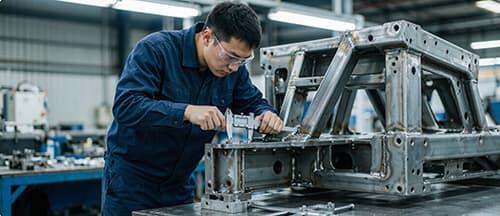
Every welded joint gets inspected for weld continuity, penetration, and raised spatter that may crack under working load. The cutting deck bears repeated impact forces, so all deck seams receive a secondary round of inspection.
The cutting deck must sit perfectly square relative to the main chassis. Even minor misalignment creates an uneven cutting pattern and triggers one‑sided premature wear on spindle bearings. We measure geometry before the very first engine startup. Running the machine first can mask root causes of vibration that only surface after weeks of field work.
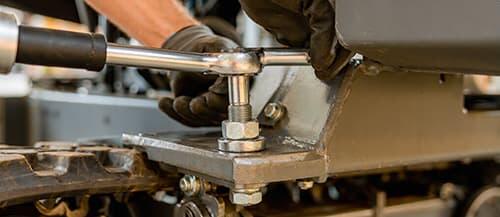
All critical fasteners are tightened using calibrated torque wrenches following official specifications, rather than relying on manual feel. Blade bolts and drive‑sprocket bolts pose the highest risk if they fail, so these two sets get inspected twice.
Initial startup is performed with the blade disengaged and zero drive load applied. At idle speed we hunt for faults that become hard to spot once the unit is working: uneven motor current draw, air trapped inside hydraulic lines, or remote‑control signal glitches triggered when the power unit fires up.
Engine or motor run‑up and temperature: Power units are brought fully up to operating temperature. Technicians monitor oil pressure (where equipped), cooling performance, and electric‑motor current draw. High initial current that stabilizes is normal; sustained high current triggers rework on the production line.
Drive response under load: The machine runs against controlled resistance on our factory test pad. Both tracks or wheels must accelerate and decelerate in unison. One‑sided lag will develop into on‑slope drift out in the field, a fault far harder to diagnose at a customer jobsite than in‑house.
Blade engagement and speed: The deck engages at low throttle then full working throttle. Blade rotational speed gets verified against spec. Inspect for hesitation, vibration, or shifting engine note under load. A healthy assembly maintains consistent sound across the throttle range.
Hydraulic system (where fitted): Hoses are checked for routing clearance and rubbing points. Fittings get inspected for pressure‑induced seepage after sustained runtime. Minor weeping leaks will not show up during static bench inspection, making this loaded test essential.
Tracks, blades, and the remote‑control system account for most field‑reported issues. All three can appear perfectly fine while stationary. Our testing targets faults that only emerge after multiple operating seasons, not cosmetic defects visible in static photos.
Track tension and alignment: Tracks are adjusted to factory‑specified sag values, then cycled forward and reverse to confirm they stay centered. Excess tension shortens idler‑bearing service life; insufficient tension makes tracks jump under load. Final tension values are logged for later reference if customers submit service inquiries.
Blade balance and cutting edge: Every blade gets checked for dynamic balance and handling‑inflicted edge damage. An out‑of‑balance blade will destroy spindle bearings rapidly; the first visible symptom is uneven cut quality.
Remote range and fail‑safe behaviour: We test operating range at distance and around physical obstacles. Fail‑safe function gets verified by intentionally powering off the transmitter. Upon signal loss the machine must execute a defined safe response, it cannot simply keep running. This test runs on every single unit, as signal dropout is the condition that turns minor defects into serious safety hazards.
Chassis and deck are primary load‑bearing components. Every other assembly mounts onto them. Geometric deviation at this stage will later manifest as poor cutting results, accelerated bearing wear, or hard‑to‑trace vibration faults — all far costlier to repair once out of the factory. We prioritize catching these while units sit on the workbench.
Weld continuity on high‑stress seams: Deck‑corner and spindle‑mount weld seams receive individual inspection. These locations absorb heavy impact loads, and performing effective field repairs on them is slow and expensive.
Deck squareness and spindle alignment: Straight‑edges and precision gauges verify deck geometry. Even small misalignment creates stepped mowing results. Operators often incorrectly blame dull blades instead of tracing the root cause back to frame geometry.
The order of testing matters greatly. Starting the engine before structural inspection can mask latent vibration triggers. Minor frame or deck misalignment will not show symptoms within the first minutes of operation, yet bearings and spindles begin wearing in abnormal patterns that only surface weeks later. Detecting structural issues pre‑start avoids complicated post‑delivery troubleshooting.
After passing all bench‑line inspections, every machine moves outdoors for real‑world field testing. This phase bridges theoretical specification sheets and actual performance across grass, slopes, and field‑style debris you will never find inside a workshop. It consumes significant production time and is one step we refuse to shortcut.
A slope run: Units operate across real‑world gradients to confirm stable line‑holding and resistance to sliding under shifting cutting loads. Printed maximum climb ratings do not fully replicate performance on damp grass; we validate real‑world behaviour before crating.
A cut‑quality check: We mow test strips then inspect finish quality. Uneven cut height, streaking, or grass clumping point toward deck levelling, blade condition, or ground‑speed issues. Cut appearance is what end‑users notice first, so we never rely purely on specification documents.
A stress run over rough ground: Machines operate over ruts and loose debris. Technicians watch for fastener loosening, track mis‑tracking, and deck impact absorption. Twenty minutes of rough‑ground stress testing delivers insights no amount of bench inspection can match.
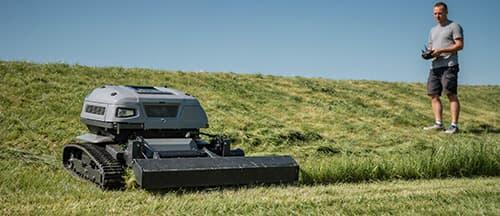
The purpose of field testing is uncovering gaps between printed specs and real‑world operation. Slope runs detect slow track‑creep; cut inspections reveal fractional deck misalignment; stress runs find brackets that are correctly tightened yet poorly supported. All these defects are cheap to correct on‑site at our facility.
Important note: Our factory inspections verify machine condition upon leaving our premises. They cannot replace on‑site commissioning and pre‑operation checks performed by operators after delivery, nor cover damage occurring during transit. Opening‑crate visual inspection by buyers remains recommended practice.
All fluid levels get topped to factory specifications, batteries receive proper charging, and serial numbers get logged against each unit’s build sheet. Shipping crates are packed with matching hand tools, chargers, spare blades, and complete operator manuals. A second staff member signs off against the packing checklist to eliminate missing‑accessory warranty‑support tickets later on.
When comparing different equipment suppliers, do not merely ask “do you have an inspection checklist”. Almost every manufacturer maintains one document. The critical questions are: which inspections run under real working load, does every unit complete actual slope testing before shipment, is remote‑control fail‑safe physically demonstrated, and are inspection results formally signed off by an inspector.
Full inspection sequence in order:
Weld inspection on chassis and deck
Frame geometry and deck alignment
Bolt torque on drive and blade fasteners
Engine or motor run‑up and operating temperature
Drive response under load
Blade engagement and blade speed
Hydraulic system checks, where fitted
Track tension and alignment
Blade balance and cutting edge
Remote range and fail‑safe behaviour
Slope run
Cut‑quality check
Stress run over rough ground
Final fluids, documentation, and packing
These QC procedures will not make a machine completely immune to wear‑and‑tear. Their purpose is ensuring predictable, foreseeable failures get caught inside our workshop, where repairs are low‑cost, instead of showing up on customer job‑sites with costly downtime consequences.
Costly warranty‑prone faults rarely appear within the first operating hour. Most emerge in the third month of service: bearings pre‑loaded under minor misalignment, tracks set with fractional tension error, remote systems never validated at full working range. These are exactly the risks visual walk‑around checks cannot catch, yet our structured loaded‑test workflow targets them.
Every shipped unit carries a build‑sheet record including serial number, production date, inspector initials, measured blade speed, track‑tension readings, plus slope‑test and cut‑quality results. This is not meaningless administrative overhead. It supplies our service team baseline reference data whenever customers report field issues, and gives buyers tangible proof their unit went through complete verification instead of superficial visual‑only checks.
Two key expectations we set for receiving‑site operators: perform a brief inspection immediately upon crate opening before putting the mower into service, and strictly follow published maintenance intervals. The vast majority of warranty‑claim root causes trace back to skipped pre‑delivery receiving checks or neglected routine maintenance. You can watch clips showing our factory QC and field‑test workflows on our TikTok channel. You can view our full range of RC slope‑mower models at our Made‑in‑China store page.
If you have questions about our pre‑delivery QC standards for bulk fleet orders, connect with our engineering team via WhatsApp.
Get instant pricing, specs, and shipping details from our team.