
86 13686388557

Date:2026-10-13
What works under the lines depends on what is growing there
A utility corridor is far from a standard lawn. It consists of long, narrow, awkward‑shaped strips of land filled with obstacles every few hundred feet, unpredictable slopes, and constantly‑changing vegetation types stretching mile after mile. The optimal cutting solution is seldom the largest machine or widest cutting deck. Instead, success comes from matching equipment directly to real‑world site conditions. Drawing on feedback from utility contractors and right‑of‑way maintenance crews, here is how to select suitable equipment for corridor mowing work.
One of the costliest common mistakes is purchasing equipment first, only to discover it cannot handle existing plant growth. If corridor maintenance happens just once per year, you will encounter mature brush, saplings and woody stems that standard finishing mowers cannot process. In this scenario you require a flail or mulching deck fitted with swing‑back hammers. If your contract requires monthly mowing targeting grass and light weeds, conventional rotary or reel setups deliver faster operation and lower running costs. Identify the tallest and thickest plant material you normally encounter in regular cycles, then specify your cutting system for those typical conditions, not only for the absolute worst‑case scenario.
Utility corridors traverse varied terrain including embankments, drainage ditches and hillside access roads. On slopes above approximately fifteen degrees, conventional ride‑on mowers create notable safety risks. For gradients exceeding twenty degrees, operators should never sit onboard the mower, and this is exactly where remote‑controlled tracked machines deliver great value. Tracked RC units maintain stable cutting lines across side‑hill terrain where wheeled machines slip, while keeping operators completely outside roll‑over hazard zones. For flat stretches, wide‑deck tractors or zero‑turn mowers remain hard‑to‑beat for high acre‑per‑hour output. Very often, the practical solution combines two different platforms for separate terrain sections.
Wider cutting decks obviously improve working speed — up to a point. Utility corridors are packed with access gates, fence lines, equipment pads, guy wires, culverts and marker posts. A six‑foot deck that cannot fit through standard access gates forces lengthy, inefficient detours. Always measure the narrowest passage points across every segment before finalizing deck width specifications. Also bear in mind that turning wide‑bodied machines on uneven ground frequently causes turf and soil damage. In obstacle‑dense narrow corridors, compact remote‑controlled mowers often achieve better overall productivity compared to large tractors.
When working within utility corridors, deck configuration matters more than raw horsepower. Flail decks produce limited debris throw, which is critical when operating near utility poles, insulators and signage. They mulch vegetation rather than ejecting cut material across the right‑of‑way. Swing‑back hammers tolerate impacts against rocks and occasional fence‑post contact. Fixed‑blade rotary decks are simpler and lower‑cost, yet they hurl debris forcefully and chip easily upon striking stone. For most utility‑corridor assignments, a flail deck with replaceable hammers serves as the safe baseline, with discharge direction oriented away from infrastructure.
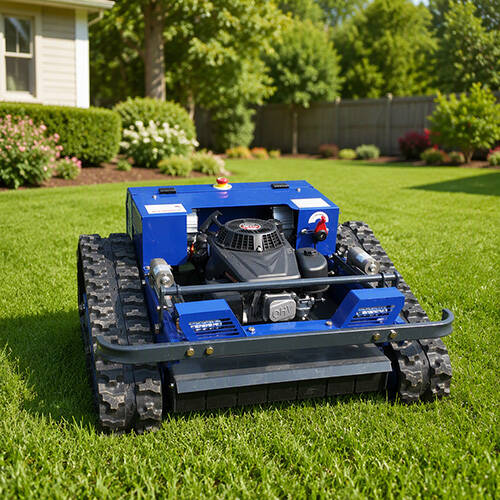
Utility‑corridor maintenance comes with special operational rules that regular lawn‑mowing work does not face. You must maintain safe clearance distances from live electrical hardware, avoid throwing debris toward public roadways, and keep specified separation from poles and fittings. Certain contracts demand spotter personnel or equipment lock‑out procedures. These constraints favour machines offering precise movement control and low debris‑throw performance. Remote‑controlled operation brings distinct advantages here: operators stay at a safe distance while still working in close proximity to structures. Always read through access agreements and contract safety clauses before quoting project costs; these requirements can eliminate otherwise suitable equipment choices.
Corridor work places heavy stress on equipment. Rocks, buried wire, hidden fence remnants and thick brush wear down blades and belts rapidly. Long transit distances between work segments add many operating hours that involve zero actual mowing. Complete daily inspections covering belt tension, hammer wear, track condition and hydraulic fluid levels. Carry key spare parts on‑board your service truck: replacement belts, hammers, shear pins and remote‑control batteries. A machine breaking‑down twenty‑miles deep within a right‑of‑way creates extremely costly work delays. The best low‑maintenance option is usually equipment with fast‑access spare‑part supply chains, not simply the unit with the lowest purchase price. Our service records show many utility‑contractor headaches stem from ignoring spare‑part lead‑time before buying.
Transmission‑line and pipeline rights‑of‑way are typically long, straight, mixed‑terrain routes dotted with access gates. Wide rotary or flail‑deck tractors handle flat stretches, and remote tracked mowers manage slopes and ditches. Rail corridors are narrow, fenced sites requiring precise control and minimal debris discharge; compact carriers fitted with flail decks represent the standard solution. Solar‑farm corridors demand careful movement between panel rows, where low ground pressure and narrow machine footprint count more than raw speed. Power‑line corridors under overhead wires require equipment that operates close to hardware without launching debris upwards. No single machine excels across all these four scenarios.
For most utility‑maintenance contractors, the optimal grass‑cutting setup for corridors is not one single machine but a mixed fleet. Deploy wide‑deck tractors or zero‑turn units for long open flat sections where high acreage output drives profitability. Keep compact remote‑controlled tracked flail mowers for slopes, ditch banks, obstacle‑crowded zones and every location where onboard operator seating is unsafe. While multiple‑machine fleets sound expensive upfront, they are frequently more economical than owning one poorly‑suited machine that cannot safely finish half the project, or hiring manual labour for hard‑to‑reach terrain segments.

Begin your planning by assessing vegetation and the steepest slopes written within your contract. Specify decks for the local plant material, select chassis platforms for terrain conditions, and set machine width according to gate and passage dimensions. Next evaluate site safety rules, parts availability and daily maintenance workload. Follow this workflow and proper equipment selection stops being guesswork. You can watch real‑world utility‑corridor mowing examples on our TikTok channel. You may also review our relevant mower configurations at our Made‑in‑China store page.
If you need fleet‑planning advice for utility‑right‑of‑way assignments, discuss your project parameters with our engineering team via WhatsApp.
Get instant pricing, specs, and shipping details from our team.