
86 13686388557

Date:2026-07-24
From raw steel to finished equipment, every remote control lawn mower that leaves our factory goes through dozens of manufacturing and inspection procedures before it reaches customers around the world. This isn't a marketing brochure—it's a real look inside our production line and the people responsible for building every machine.
The machines produced daily at our factory will ultimately be used in French vineyards, U.S. solar farms, Australian orchards, and commercial landscaping projects across Europe. However, before entering service, every mower must undergo welding, machining, assembly, the installation of electronic components, field testing, and a final quality inspection.
Rather than simply showing finished products, we'd like to show you how a remote control mower is actually built. Follow us through one ordinary working day and discover what happens behind the factory doors.

The workshop remained silent. Most of the lights were still off, and production had not yet officially begun.
But Lin, our floor supervisor, is already walking slowly along Assembly Line A. Instead of carrying paperwork, he carries a flashlight and a torque wrench. He inspects freshly welded chassis, checks cable routing, and carefully examines every critical fastening point before the first operator even clocks in.
At Station 7, he notices something unusual—a blade adapter bolt has been installed but hasn't reached the specified torque value. Without calling anyone over, Lin adjusts his torque wrench to 85 N·m, tightens the bolt, and marks it with a white paint pen.
"If I find the same issue tomorrow, we'll have a different conversation."
Quality control does not begin at the end of production but rather before production starts. Identifying small details early on can prevent costly issues that arise after the lawn mower has traveled thousands of miles to reach the customer.
Unlike many factories that start the workday with motivational slogans, our morning meetings focus entirely on facts.
Today's production target is 14 RC-800 tracked remote control lawn mowers. Before work starts, Lin places a slightly deformed blade adapter on the meeting table. It was returned by a dealer in Ohio after one fastener drifted by only two Newton-meters during installation.
Every technician examines the part closely. Instead of reading training manuals, they learn directly from real-world cases. Understanding why a component failed is often more valuable than simply knowing how to assemble it.
We don't decorate our workshop with "Zero Defect" posters. We investigate every returned component, identify its root cause, and improve the production process. That's how product quality improves year after year.
Before a remote control lawn mower becomes a finished machine, it begins as a flat sheet of steel. Material selection is one of the first decisions that determines how well a mower will perform years later in vineyards, orchards, hillsides, and commercial landscaping projects.
For our chassis, we use Q355B high-strength alloy steel, a material that offers significantly higher strength than standard A36 mild steel while maintaining excellent weldability. Although it increases production costs, the additional durability helps the chassis withstand continuous vibration, impacts, and heavy-duty operation on uneven terrain.
Each steel plate enters the laser cutting line, where computer-controlled equipment maintains a cutting tolerance of approximately ±0.2 mm. Once cut, every component moves directly to the CNC bending station, where hydraulic presses shape the deck housing and structural frame with exceptional consistency.
Xiao has operated this bending machine for nearly a decade. While the computer controls every movement, his experience allows him to notice subtle deviations that numbers alone sometimes cannot reveal.
Material: Q355B high-strength alloy steel
Laser Cutting Accuracy: ±0.2 mm
Bending Accuracy: ±0.5°
Initial Production Reject Rate: Less than 0.8%
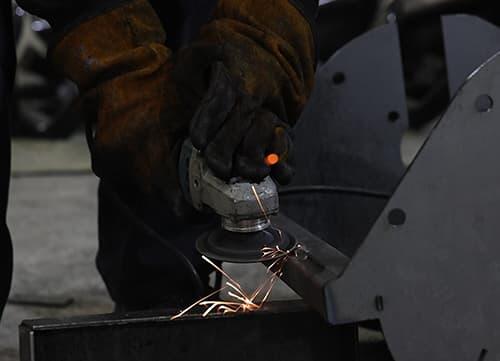
Automation plays a vital role in every aspect of our factory's operations, yet certain processes still rely on experienced technicians. The welding department is a prime example.
Longer structural welds are performed by robotic welding arms, ensuring exceptional consistency throughout the production process. However, critical load-bearing areas—including suspension mounting points, chassis reinforcement points, and impact zones—are still manually welded by experienced technicians.
One of them is Zhang Lao, who spent over 22 years perfecting his craft. Observing him at work, you'll notice that every weld seam is uniform, clean, and precise. These details might not be visible after the lawn mower is painted, but they directly impact the long-term durability of the lawn mower in harsh working conditions.
"The robot's performance is extremely stable, but at the most critical moments, experience still plays a decisive role. This is the key reason why the lawn mower can operate reliably year after year"
Rather than replacing skilled welders entirely, we combine automation with manual craftsmanship. Robots deliver repeatability, while experienced technicians inspect and reinforce the structural areas that receive the greatest stress during real-world operation.
A well-built chassis is the foundation of every tracked remote control lawn mower. Strong welds reduce vibration, improve structural rigidity, and help the machine withstand years of continuous mowing across rough terrain without premature fatigue.
After passing the structural inspection, the chassis enters one of the most important stages in the production process - the installation of the power system. Whether the machine is equipped with a gasoline engine or an electric drive system, each component must be precisely installed in place for the lawn mower to be finally assembled.
Each remote control lawn mower follows a standardized assembly process. Technicians install the engine or drive motor, transmission components, crawler drive system, hydraulic assemblies, and electronic control modules according to detailed production specifications. Every mounting bolt is tightened using calibrated torque tools to ensure consistent installation quality across every machine.
Unlike many mass-production factories, we do not rely solely on automated equipment. Experienced assembly technicians perform manual calibrations throughout the assembly process, ensuring that the drive system, cutting system, and chassis are perfectly balanced before the mower reaches the testing area.
Precision installation of engine or electric drive system.
Calibrated torque tools used on every structural fastener.
Manual alignment inspection before final assembly.
Every major component receives an identification code for quality traceability.
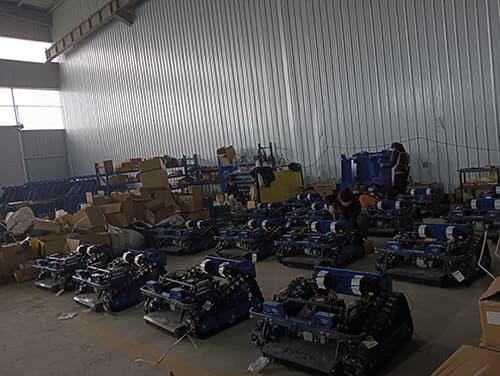
Mechanical assembly is only part of the process. Every RC mower also depends on a reliable electronic control system that allows operators to work safely from a distance.
Our technicians meticulously install wiring harnesses, electronic control units, remote receivers, sensors, display modules, and safety circuits. Each cable is routed through protective sleeving and secured with specialized clips to minimize vibration, prevent abrasion, and enhance long-term reliability in demanding outdoor operating environments.
Once installation is complete, each electrical system undergoes an individual functional check. Engineers verify throttle response, steering precision, blade engagement, emergency stop operation, signal transmission, and battery or charging status before approving the machine for field testing.
Although most of these electronic components are concealed beneath the body panels, they play a crucial role in ensuring stable communication between the operator and the mower during every operation.
Every electronic system is tested individually before leaving the assembly line. Functions such as steering, blade control, emergency stop, remote signal stability, and safety protection must all operate correctly before the mower progresses to outdoor performance testing.
By the afternoon, the production workshop had grown noticeably quieter. This was because the finished machines had been moved to the outdoor testing area—one of the most critical steps prior to shipment.
Unlike factories that rely solely on bench testing, we test every finished remote control lawn mower in real-world working conditions. Our testing grounds include flat lawns, rugged terrain, gravel paths, and man-made slopes to simulate the diverse environments our customers encounter daily.
Technicians evaluate steering precision, throttle response, braking performance, blade engagement, climbing ability, and overall machine stability. Any abnormal vibration, unusual noise, or operational instability results in the mower being immediately sent back for adjustments before it can proceed to the next stage of inspection.
For tracked vehicles, engineers pay special attention to track tension, cornering stability, and climbing performance. For wheeled vehicles, they verify traction, steering responsiveness, and ride smoothness across various road conditions.
✔ Remote control response accuracy
✔ Blade engagement and cutting performance
✔ Straight-line driving stability
✔ Emergency stop function
✔ Slope climbing capability
✔ Noise and vibration inspection
✔ Complete functional verification
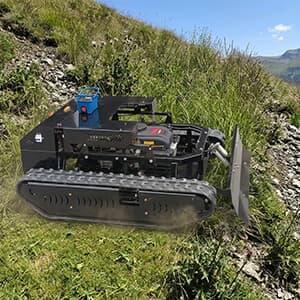
After successfully completing field tests, each lawnmower moves to the final inspection area. This is the last opportunity to detect even the slightest defect before the machine is cleared for shipment.
Quality inspectors meticulously examine every detail, ranging from the paint finish and warning labels to hydraulic hoses, wiring, fasteners, and protective covers. They also verify that all accessories—including the remote control, charger, spare blades, user manual, and tool kit—are included with the order.
Every RC mower receives its own serial number and inspection record, allowing complete production traceability. If a customer requires technical support, replacement parts, or warranty service, this identification code can be used to quickly retrieve the production history.
The machine may only be cleared for packaging once all inspection items have been signed off as passed. All lawnmowers must complete the final verification process before leaving the factory.
| Inspection Item | Verification |
|---|---|
| Mechanical Assembly | 100% Checked |
| Electrical System | Fully Tested |
| Remote Controller | Signal Verified |
| Safety Functions | Emergency Stop & Protection Tested |
| Accessories | Complete Package Confirmed |
Once every inspection has been completed, the remote control lawn mower enters the packaging area. At this stage, the focus shifts from manufacturing quality to protection during transit. Since many of our machines travel thousands of kilometers by sea before reaching the customer, proper packaging is just as important as correct assembly.
Each lawnmower undergoes thorough cleaning before packaging. Residual grass clippings, dust, fingerprints, and traces from testing are removed to ensure the customer receives the machine in excellent condition. Exposed metal parts are treated against rust where necessary, and moving parts are secured to prevent vibration during transit.
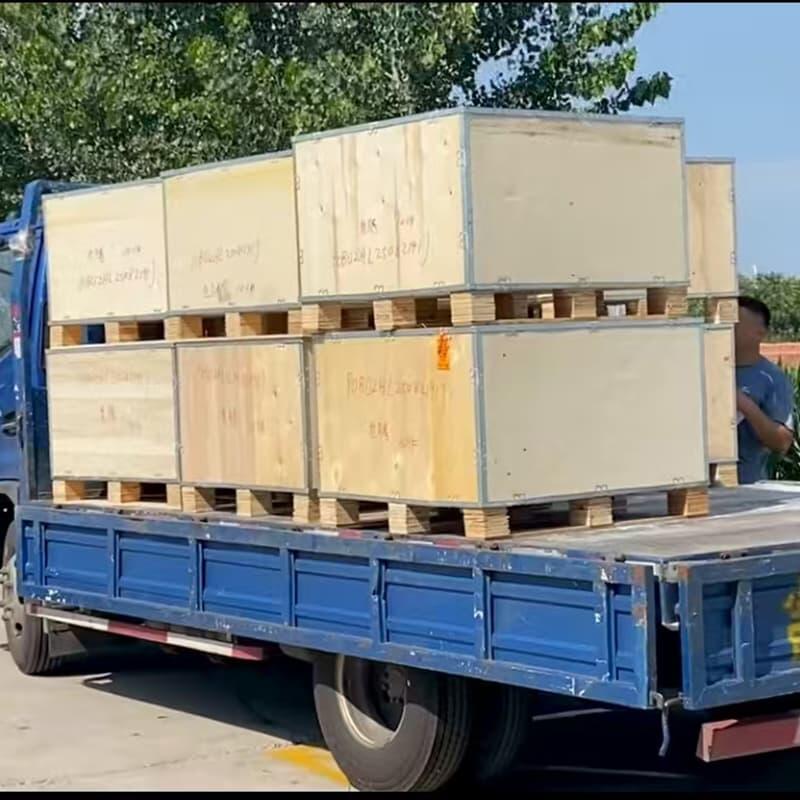
Depending on the mode of transport and the destination country or region, the lawnmower is secured onto a reinforced steel pallet or inside a heavy-duty wooden crate. Multiple anchor points ensure the machine remains stable during loading, sea transit, and unloading, thereby minimizing the risk of shifting within the container.
Complete exterior cleaning and inspection.
Protect vulnerable components with cushioning materials.
Secure the mower onto reinforced export pallets or wooden crates.
Include remote controller, charger, spare parts, manuals, and accessories.
Apply shipping labels and export identification before loading.
Q: Is every lawnmower field-tested before shipment?
A: Yes. Before being approved for delivery, each machine undergoes testing for steering, blade operation, braking performance, remote control responsiveness, and overall functionality.
Q: How do you ensure product quality during the production process?
A: Quality control is integrated throughout the entire manufacturing process, encompassing material inspection, welding verification, assembly checks, electronic testing, outdoor performance testing, and final quality inspection prior to packaging.
Q: Can I still purchase replacement parts after delivery?
A: Yes. Long-term after-sales support is available for common replacement parts such as blades, tracks, batteries, motors, controllers, and other wear parts.
Q: Is the packaging of these machines suitable for international shipping?
A: Certainly. Each lawnmower is secured using export-grade pallets or wooden crates, designed to minimize movement and protect the equipment during long-distance sea or land transport.
Q: Can customers visit the factory before placing an order?
A: Yes, certainly. We welcome customers to visit our factory and watch product demonstrations. Customers unable to visit in person can also request an online video to view the production progress.
Building a professional remote control lawn mower involves much more than simply assembling parts. From selecting high-strength steel and precision laser cutting to experienced welding, careful assembly, electronic integration, outdoor testing, and export packaging, every stage contributes to the reliability customers expect in real working environments.
Whether the mower is used for hillside maintenance, orchard management, municipal landscaping, or commercial vegetation control, consistent manufacturing standards and rigorous quality inspections ensure reliable operation long after the machine leaves the factory.
For professional users, selecting a manufacturer involves more than just comparing specifications; it is crucial to understand the production processes behind each machine. Superior craftsmanship, rigorous testing, and reliable after-sales support are what transform a piece of equipment into a long-term investment.
Get instant pricing, specs, and shipping details from our team.