86 13686388557

Date:2026-03-20
As outdoor living continues to play an important role in lifestyles across the United States and Europe, maintaining a clean, well-managed lawn has become more than just a routine task—it is a reflection of property value, personal standards, and even environmental awareness. In this evolving landscape, remote control lawn mowers are emerging as a powerful solution that combines efficiency, safety, and advanced technology.
Unlike traditional mowing equipment, remote control lawn mowers are designed to reduce physical labor while increasing operational precision. These machines are particularly well-suited for large properties, complex terrains, and professional landscaping environments where performance and reliability are critical.
Lawn care has come a long way from manual push mowers to ride-on machines and now to remote-controlled and even autonomous systems. In Western markets, where labor costs are high and efficiency is essential, innovation in landscaping equipment has accelerated rapidly.
Remote control lawn mowers represent a transitional stage between traditional machinery and fully autonomous robotic mowers. They offer users direct control while eliminating the need for physical presence, making them a practical and cost-effective solution for many applications.
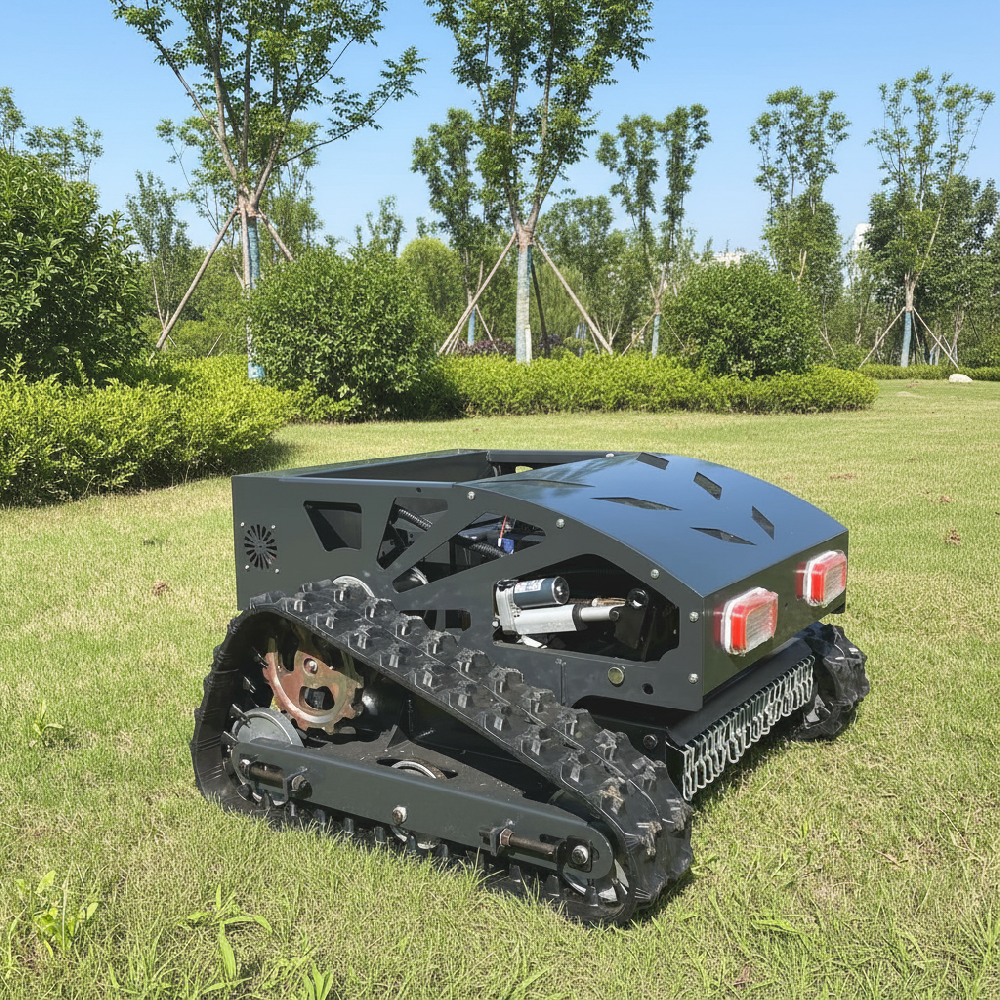
Modern remote control lawn mowers are equipped with a wide range of advanced features that enhance both usability and performance. These include powerful engines or electric motors, durable cutting blades, and robust chassis designs capable of handling tough environments.
Many models feature track-driven systems or four-wheel drive capabilities, allowing them to operate efficiently on slopes, uneven ground, and wet terrain. Remote control systems typically offer long-range connectivity with stable signal transmission, ensuring precise operation even at a distance.
Some high-end machines also integrate smart technologies such as mobile app control, real-time monitoring, and semi-autonomous navigation. These innovations are transforming lawn care into a more intelligent and user-friendly experience.
One of the most significant advantages of remote control lawn mowers is safety. Operating traditional equipment on steep slopes or hazardous terrain can be dangerous. With remote control functionality, users can maintain a safe distance while still achieving precise results.
Efficiency is another major benefit. Remote control mowers are designed to cover large areas quickly, reducing the time required for lawn maintenance. Their powerful performance ensures consistent cutting quality, even in dense or overgrown grass.
Additionally, these machines reduce physical strain on users. Instead of pushing or riding heavy equipment, operators can control the mower comfortably from a remote position, improving overall work experience and productivity.
Remote control lawn mowers are widely used in various sectors across Western countries. In residential settings, they are ideal for homeowners with large lawns or challenging landscapes. In agriculture, they are used for maintaining fields and clearing overgrown vegetation.
Municipalities and local governments use these machines for roadside maintenance, public parks, and green spaces. Commercial property managers rely on them to maintain office parks, resorts, and industrial areas efficiently.
Their ability to operate in hard-to-reach or dangerous areas makes them especially valuable in environments where traditional equipment may not be practical or safe.
The demand for remote control lawn mowers is steadily increasing in Western markets. Several factors are driving this growth, including rising labor costs, increased focus on workplace safety, and the growing adoption of smart technologies.
In Europe, strict environmental regulations are encouraging the use of electric and low-emission equipment. In the United States, large property sizes and a strong landscaping culture are fueling demand for high-performance mowing solutions.
Consumers are also becoming more willing to invest in premium equipment that offers long-term value, durability, and advanced features.
Sustainability is becoming an important factor in purchasing decisions. Many manufacturers are now offering electric or hybrid remote control lawn mowers that produce less noise and fewer emissions compared to traditional gasoline-powered machines.
These environmentally friendly options not only comply with regulations but also appeal to eco-conscious consumers. Reduced fuel consumption and lower maintenance requirements further contribute to their long-term benefits.
Despite their advantages, remote control lawn mowers also come with certain challenges. The initial investment cost can be higher than traditional equipment, which may be a concern for some users.
Additionally, users need to become familiar with remote operation and maintenance requirements. Signal interference, battery limitations (for electric models), and terrain limitations in extreme conditions are factors that should be considered.
However, as technology continues to improve, many of these challenges are being addressed through better design, enhanced battery performance, and more reliable control systems.
The future of remote control lawn mowers looks promising. As automation and artificial intelligence continue to develop, these machines are expected to become even more advanced, with features such as full autonomy, obstacle detection, and intelligent path planning.
Integration with smart home ecosystems and cloud-based management systems may further enhance usability, allowing users to monitor and control their equipment remotely from anywhere.
As adoption increases, remote control lawn mowers are likely to become a standard tool in both residential and commercial lawn care.
Remote control lawn mowers represent a significant advancement in lawn care technology. By combining safety, efficiency, and innovation, they address many of the challenges associated with traditional mowing methods.
For businesses targeting Western markets, these machines offer a strong opportunity to meet growing demand and differentiate through technology and performance. As the industry continues to evolve, investing in remote control lawn mower solutions is not just a trend—it is a strategic move toward the future of landscaping.